Get Full Government Meeting Transcripts, Videos, & Alerts Forever!
Get email alerts on the Housing topic
No spam. Unsubscribe anytime.
Council hears state MURAL housing program overview; asks staff to explore staffing, ordinance and Polk County options
Summary
OHCS described the MURAL revolving-loan program (state allocation and rural set-aside) and how sponsoring jurisdictions pass an ordinance and administer projects; councilors expressed interest but asked staff to study local administrative capacity, draft ordinance language, and explore a Polk County collaborative option before deciding whether to enroll Monmouth.
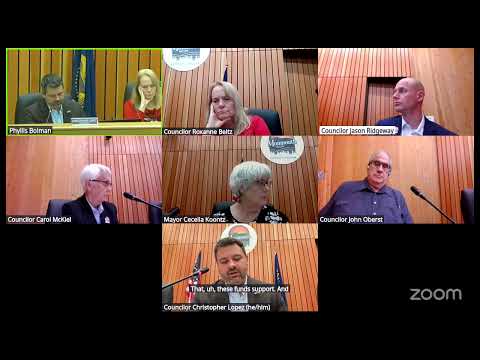
Monmouth City Council received a technical briefing Dec. 2 on Oregon’s Moderate Income Revolving Loan (MURAL) program — a flexible program intended to help cities and counties finance housing affordable at up to 120% of area median income.
Community and Economic Development Director Suzanne Duffner framed the session as exploratory. Lindy Romero of Oregon Housing and Community Services (OHCS) explained the program’s mechanics: OHCS acts as loan issuer; sponsoring jurisdictions pass an originating ordinance that sets local site approval processes, a utility‑allowance method and a compliance plan; once a master agreement is signed and projects are provisionally approved, OHCS can issue no‑interest loans to sponsoring jurisdictions that are then issued to developers as grants. The loan includes a 6% administrative component (5% to the sponsor, 1% to the county assessor). Romero said the program was created under Senate Bill 1537 and the state initially allocated $75 million overall and $50 million in the first biennium, with $10 million set aside for rural jurisdictions.
Romero and Jason Mackey said the program is intentionally flexible: sponsoring jurisdictions can set lower AMI caps (e.g., 80% or 100% AMI), define loan terms (examples showed 10–12 year options), and layer MURAL funds with other state or local funding. Senate Bill 48, a technical fix expected to take effect in early 2026, adds further repayment flexibility and the option to use loan mechanisms instead of a pure tax‑increment/TIF model.
Councilors raised several practical concerns: whether the 6% admin fee will cover the additional staff time to administer projects (staff could not confirm and offered to research comparable jurisdictions), how long affordability periods should last (OHCS noted the program requires a minimum affordability period tied to the loan life but jurisdictions may adopt longer restrictions), and whether conversions of existing apartments to condominiums or conversions from nonresidential to residential would qualify (OHCS will check legislative detail and report back). Several councilors emphasized the importance of stacking MURAL with other funding to extend affordability.
The council agreed to direct staff to investigate staffing and administration costs, reach out to Polk County (and Commissioner Jeremy Gordon) about a countywide or shared administration option, and return with draft ordinance language and a recommended path forward. Staff noted technical assistance funds are available to jurisdictions that have passed the originating ordinance.
What’s next: staff will analyze local capacity, check Polk County interest in a coordinated approach, and bring draft ordinance language and a recommended administrative model to council for further direction.