Get Full Government Meeting Transcripts, Videos, & Alerts Forever!
Get email alerts on the Local Housing Policy topic
No spam. Unsubscribe anytime.
Sherwood staff recommend code audit and possible charter amendment after state housing bills; Sherwood West appeal upheld
Summary
City staff briefed the council on Sherwood West appeals and recent housing bills (SB1537, a 2025 bill limiting design standards for subdivisions over 20 units, HB213A, HB225A). Staff recommended a full code audit, warned of planning capacity impacts and proposed charter language to protect public‑process rights.
City planning staff and legal counsel told the Sherwood City Council on Oct. 7 that recent state housing legislation will require a significant local response, including a full audit of the city’s land‑use code and consideration of a charter amendment to protect local procedural rights.
Eric Rutledge, Sherwood’s community development director, updated the council on Sherwood West: Metro’s decision to expand the urban growth boundary was appealed to the Land Conservation and Development Commission (LCDC), and LCDC upheld Metro’s decision. Rutledge said staff expect further appeals to the Court of Appeals and that the decision currently stands.
Rutledge reviewed the suite of bills affecting local land use. He said Senate Bill 1537 (2024) established the Housing Accountability and Production Office (HAPO) and created mandatory adjustments — commonly described as variances — for qualifying housing developments (for example, proposals over 17 units per acre). Sherwood has submitted an exception application that Rutledge said is under HAPO review.
Rutledge and councilors discussed a Department of Justice interpretation that, for now, permits Sherwood to continue using its comprehensive‑plan procedures because an older statutory provision was not removed from the text. “We are now continuing to process limited land use applications under our own procedures as an interpretation of the state law supported by the DOJ,” Rutledge said.
Staff also described a 2025 bill that restricts application of local design standards to subdivisions over 20 single‑family units (the transcript labeled it 'SP 974') and said another bill shortens public‑notice distances and could convert many planned unit developments (PUDs) from council hearings to staff decisions unless an appeal is filed. Rutledge warned that such procedural changes could reduce opportunities for public hearing and public council review even if written testimony remains accessible.
Councilors asked how those procedural changes would affect timelines and whether developers could use concurrent or alternative application types to preserve public hearings; staff said some work‑arounds may be possible but emphasized uncertainty in interpretation and implementation.
Because compliance work will be time‑consuming, Rutledge requested council direction to proceed with a full code audit, a schedule for clear‑and‑objective standards and a comprehensive code update to implement the 2025 bills. He warned that the effort will divert planning capacity from other active land‑use processing and may require additional staff or reallocation of tasks.
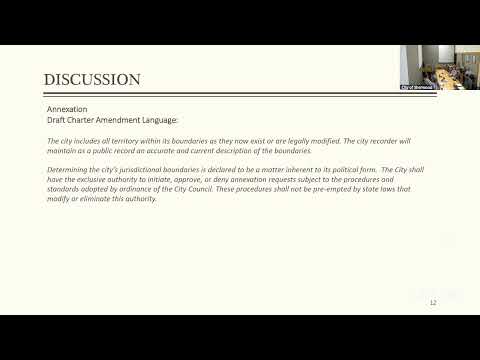
City attorneys presented draft charter language intended to protect public‑process rights. The draft emphasizes public participation, would require the council to adopt procedures maximizing transparency and would declare those procedures not preempted. Counsel suggested language that would require at least one dually noticed public hearing for Type 3 (or higher) land use applications and extend notice to 1,000 feet by charter. City Attorney Ryan Adams cautioned that a charter amendment is not a guaranteed legal shield from state preemption but could add a strong procedural argument in future litigation.
Councilors discussed cost and timing: staff estimated ballot placement costs (council discussion used an estimate of roughly $1.50 per voter and noted Sherwood’s approximate 14,000 voters) and said a resolution would need to be placed on the next council agenda to meet a January ballot deadline. Members requested staff return with draft language, fiscal estimates and options; some suggested a special meeting or rapid email feedback to finalize direction.
What’s next: staff will proceed with the proposed code audit and come back with refined charter language, cost estimates and a recommended timeline for placing any charter amendments on the ballot if council directs staff to do so.