Get AI Briefings, Transcripts & Alerts on Local & National Government Meetings — Forever.
Appropriations Committee Hears Broad Support for $40M Agriculture and Forestry Bond (LD 2094)
Loading...
Summary
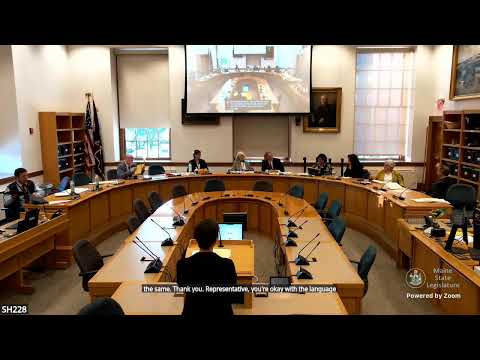
Lawmakers and scores of farmers, loggers and industry groups urged the Appropriations and Financial Affairs Committee to advance LD 2094, a $40 million general‑fund bond to bolster existing Maine programs for drought relief, dairy support, healthy soils, processing and farmland protection; no committee vote was taken at the hearing.
Representative Bill Plucker, sponsor of LD 2094, told the Joint Standing Committee on Appropriations and Financial Affairs that the $40 million bond would shore up established programs that support Maine farms and forest products businesses.
"This $40,000,000 bond represents the investment our heritage industries desperately need," Plucker said, describing allocations for an agriculture, food and forest products investment fund, a farmers drought relief grant, a healthy soils program and the Dairy Improvement Fund.
The Department of Agriculture, Conservation and Forestry (DACF) commissioner, Amanda Beal, urged the committee to treat the bond as a baseline investment that could be deployed quickly through existing DACF programs and staff. "This $40,000,000 bond proposal represents a critical investment in the infrastructure, resilience and long‑term sustainability of vital Maine industries," Beal said, adding that prior ARPA‑funded programs have already generated jobs and downstream economic activity.
Dozens of producers and industry representatives — from dairy, wild blueberries, diversified vegetable farms and logging contractors — described concrete needs the bond would address. Ron Howard of Broadus Blueberries credited a prior AIIP grant with enabling investment in harvesting and optical‑sorting equipment that opened new retail markets. "We were very fortunate to be one of those 64 farms to get that funding," he said.
Logging contractors and forestry organizations urged the committee to ensure forestry receives robust support. Dana Duran of the Professional Logging Contractors of the Northeast asked the committee to consider either a more even split between agriculture and forestry funding or an increase in the bond to $50 million with at least $25 million for each sector, and recommended emphasizing revolving, low‑interest loan programs to recapitalize funds for future use.
Numerous dairy producers described high capital costs and thin margins and urged expansion of the Dairy Improvement Fund, a revolving loan program that FAME (the Finance Authority of Maine) helps administer. Joe Cushman, a second‑generation logger, and other contractors said a low‑interest equipment loan program (cited examples of 2% versus current rates) would materially lower annual payments and make reinvestment feasible.
Other witnesses — including Maine Farmland Trust, the Wild Blueberry Commission, CEI (a community development financial institution), and the Department of Economic and Community Development — emphasized processing gaps, market development and the need to target funds to both small and regionally accessible processing and infrastructure projects.
Committee members questioned whether one‑time bond funding is the best long‑term solution and asked the department to provide options for baseline budget support during the work session. No formal committee vote was taken at the conclusion of the public hearing; the chair closed testimony and the committee signaled it would consider amendments and further work‑session language before any report or vote.
The committee also heard a brief administrative note and moved to clear the room for a separate work session on LD 1636, a study resolve regarding the start date of the state fiscal year.