
Board of Environmental Protection flags appeals rule that can slow licensing appeals; DEP outlines staffing and permitting fixes
Get AI-powered insights, summaries, and transcripts
Subscribe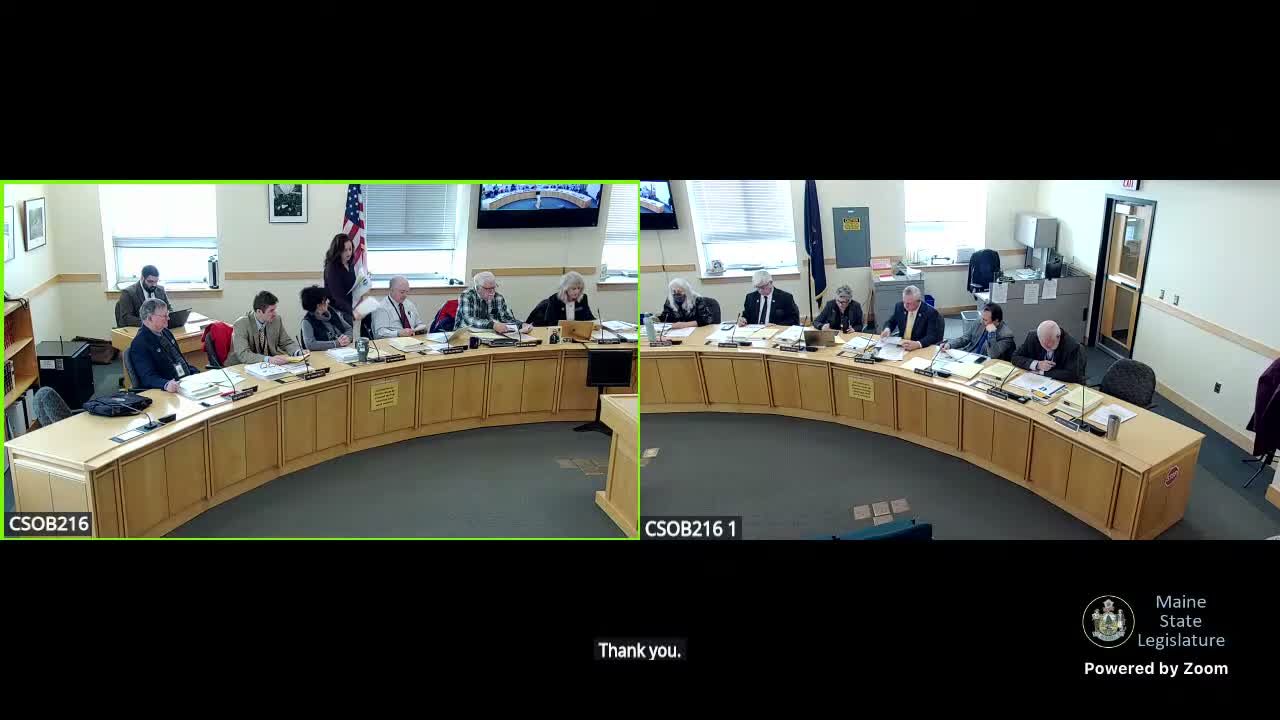
Summary
BEP analysts told the committee the appeals statute allows broad submission of supplemental evidence after licensing decisions, which can bog down appeals; they proposed narrowing who may submit new information to speed adjudications. DEP highlighted persistent vacancies (about 39) and a new online licensing system and third-party reviewers to reduce permitting delays.
The Legislature's Environment and Natural Resources Committee heard Government Evaluation Act reviews from both the Board of Environmental Protection and the Department of Environmental Protection on procedural bottlenecks and agency capacity.
Bill Hinkle, BEP executive analyst, told legislators that Title 38's appeals provision and DEP's Chapter 2 rule are unclear about who may submit proposed supplemental information after a commissioner's licensing decision. "The law should only allow the appellant and the licensee to offer new information, not every person who submitted a comment on the application," Hinkle said, arguing that permitting any commenter to submit unlimited supplemental materials can "bog down" appeal proceedings and defeat the board's faster alternative to court.
Hinkle said straightforward appeals typically take four to five months, larger appeals can take a year, and the current practice of admitting and then ruling on supplemental materials can add months through subsequent reconsiderations. He offered to provide draft statutory language if the committee directs staff to pursue a fix.
Commissioner Melanie Loizem presented DEP's GEA report and described agency efforts to reduce permitting backlogs: DEP has 408 legislatively approved positions and was tracking about 39 vacancies in December, a roughly 10% vacancy rate the agency said is typical. The department has launched the Maine Enterprise Licensing System (MELS) to post applications and public comments online, enable municipal-level email notifications for applicants, and provide an option for applicants to use prequalified third-party reviewers for faster guaranteed reviews.
Loizem said third-party review fees are negotiated with applicants and consultants and that DEP is hiring two customer-service positions to help applicants and regulators coordinate reviews. On a high-profile landfill public-benefit-determination remand, she said the judge gave the department 75 days for additional fact-finding and that DEP is weighing whether to proceed with parallel licensing steps while the PPD is being revised.
Several legislators pressed both presenters on whether the appeals provision has demonstrably changed outcomes; Hinkle said in his five-plus years on the board he had not identified a case where supplemental evidence materially altered the outcome, though he described it as an actual and growing administrative time burden. The committee did not take immediate action but directed staff to include materials and possible draft language for committee consideration in a future work session.