Get Full Government Meeting Transcripts, Videos, & Alerts Forever!
Get email alerts on the Licensing Fees topic
No spam. Unsubscribe anytime.
Panel advances bill to raise auctioneer licensing fee cap after OPOR cites deficits across boards
Summary
OPOR told the committee several licensing subaccounts operate at a deficit and asked for greater fee‑cap flexibility; the committee voted to advance LD2035 (auctioneer fee cap increase) as amended with a fiscal note, 5‑4, while some members sought a smaller increase and a department efficiency review.
LD2035 would raise the fee cap for the Board of Licensing of Auctioneers so the board can set fees sufficient to cover administrative and operational costs. Penny Valancourt, director of the Office of Professional and Occupational Regulation (OPOR), told the committee that many OPOR boards and programs have run deficits and that dedicated licensing fees must sustain board operations because OPOR receives little or no general‑fund support for these programs.
Valancourt described operational costs covered by board fees—staffing, IT, rent, assistant attorney general services, per‑diem payments for board members and occasional rule‑making or hearing expenses—and said the goal is to set fee levels that supply a healthy cash reserve (about six months of operating costs) without collecting excessive cash. She said OPOR will perform a cash‑flow analysis to set a specific fee level that sustains operations while avoiding unnecessarily large balances.
Committee members asked whether fee increases would instead be covered by internal reallocation or whether some subaccounts had been sweeps from other accounts during prior budget work. Valancourt said she is preparing a strategic plan to address vacancies and program management and would provide more detailed cash‑flow and fee‑level analysis for the committee.
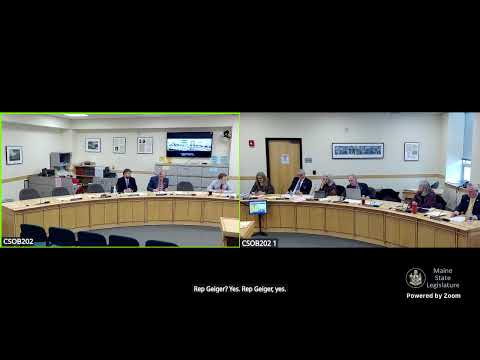
Representative Geiger moved 'ought to pass as amended' (amendment: attach fiscal note); the committee recorded a 5‑4 vote in favor. Representative Collins filed a minority report urging a $300 cap increase as a temporary step while OPOR pursues internal efficiencies.
The committee committed to a fiscal note and directed OPOR to provide the board‑level cash‑flow analysis and any requested additional information for the work session.