Labor Department seeks to modernize Maine employer substance‑testing law; safety groups and employers press for changes
Loading...
Summary
LD2110 would update Maine's employer substance‑use testing statutes: DOL staff outlined new definitions, a medical‑review process, and shifting 'positive' to 'non‑negative' screens. Employers and transportation groups urged clearer language on safety‑sensitive roles, while some labor and hospital representatives sought protections for employees with medical conditions.
Representative Skold introduced LD2110 as a series of targeted updates to Maine statute governing employer substance‑use testing, saying the bill brings definitions and procedures into alignment with modern testing practices and balances safety with worker privacy and rehabilitation.
Kate Burkhart, director of the Bureau of Labor Standards, provided a section‑by‑section analysis. Key proposed changes include removing the current exemption that allows unions to keep testing policies from the department, defining terms such as "arbitrary" testing and "legitimate medical explanation," creating a role and process for a medical review officer (MRO), and replacing the older "positive/nonpositive" language with an initial "non‑negative" screening followed by confirmation testing. Burkhart said the bill clarifies that reasonable‑suspicion testing must be based on observable behavior at work and that federal Department of Transportation rules will continue to control CDL‑related testing.
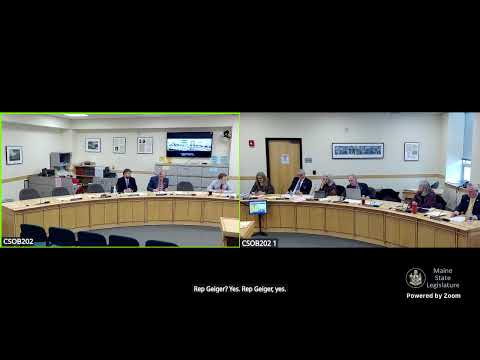
Committee members raised concerns about the practical effect of the changes. Representative Geiger pressed whether replacing a probable‑cause standard with reasonable suspicion and insisting on observable behavior would limit employers' ability to respond to single serious workplace incidents such as a school‑bus crash. Burkhart and DOL staff said an employer may still act on safety and performance grounds and that observable impairment at work (slurred speech, stumbling, smell) remains a trigger for testing; they also acknowledged the need to address interactions with disability and privacy laws at the work session.
Industry stakeholders urged further revisions. Jake Lechants, representing the Maine Better Transportation Association, said the bill as drafted raised safety concerns for private‑property job sites and heavy equipment operators not covered by federal CDL rules and recommended additional language and more stakeholder negotiation. Retail, hospital and chamber witnesses asked for clearer standards on how an MRO evaluates a "legitimate medical explanation" and cautioned that treating an initial non‑negative screening as "negative" to employers could hinder safety oversight.
Department staff and industry representatives said they met in a stakeholder session and expected additional draft language to address many concerns before work session. The chair closed the hearing and the committee signaled it will continue stakeholder engagement and refine statutory language.
No committee vote occurred at this hearing.