Transportation committee advances several items in work sessions, including messaging signs and a memorial highway designation
Loading...
Summary
The committee voted unanimously to recommend passage of a Route 3 designation, adopted a sponsor amendment and emergency preamble for variable message signs on service vehicles, and voted to pursue committee language for rental-car inspection/registration changes based on a Secretary of State report.
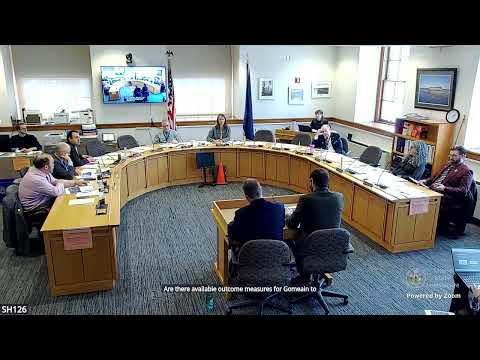
At the Jan. 22 meeting, the Joint Standing Committee on Transportation handled multiple work-session items and took procedural votes to advance measures.
Route designation: The committee considered LD 2033 (a resolve to designate Route 3 in Trenton as the Deputy Luke Gross Memorial Highway). The committee moved 'ought to pass' with a second and the chair noted the motion was unanimous of those present.
Variable message signs: In a work session on LD 2053, staff presented a new sponsor’s amendment clarifying definitions and permitted uses of vehicle-mounted variable message signs. The amendment distinguished wreckers (allowed stationary amber arrows and the words 'slow down' or 'move over') from police, fire, safety service patrol and highway maintenance vehicles (which may display broader traffic or roadway condition messages, subject to rules adopted by the commissioner of public safety). Representative Jim White moved that the bill be reported 'ought to pass as amended' with an emergency preamble; the motion carried unanimously of those present.
Rental-car registration/inspection language: Following a report from the Secretary of State’s office, the committee voted to move forward with drafting committee language based on the working-group recommendations for a multiyear inspection approach and affidavit-based accountability for rental companies; members asked to involve Lieutenant Bruce Scott in drafting details and to hold a public hearing on any committee bill.
Each of these votes was procedural: the committee chose to advance language, request further drafting, or put items into a committee bill process for public hearing, rather than enacting final statutory changes at the meeting.