Get Full Government Meeting Transcripts, Videos, & Alerts Forever!
Get email alerts on the Parking Enforcement topic
No spam. Unsubscribe anytime.
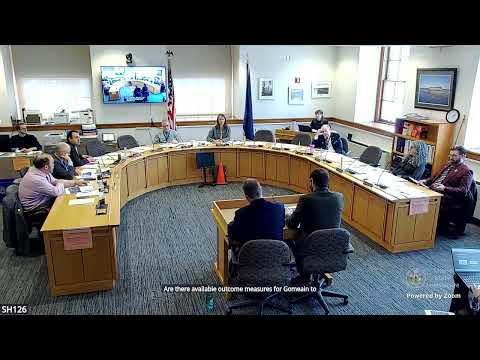
Maine transportation committee hears split testimony on bill to require on-vehicle parking notices, exempts municipal lots
Summary
A public hearing on LD 21 37 drew support from municipal officials and opposition from the University of Maine System. Sponsor Sen. Tim Nangle said the bill would require on-vehicle notices and exempt municipal lots that have local ordinances; USM warned it would harm safety and revenue models.
Senator Tim Nangle, sponsor of LD 21 37, told the Joint Standing Committee on Transportation on Jan. 22 that his bill would require that notice of a parking violation be affixed to a vehicle at the time of the alleged violation and would exempt municipal lots that have adopted local ordinances from a separate signage requirement enacted last year.
“LD 21 37 addresses this by requiring that the notice of parking violation be affixed to the vehicle at the time of the violation,” Nangle said, arguing prompt notice would let drivers correct behavior immediately and avoid delayed fines that can escalate into collections or credit reporting.
Why it matters: Nangle said the 2025 law intended consumer protections but produced unintended consequences—drivers receiving mailed notices weeks later, municipalities facing costly signage mandates, and families and students experiencing sudden fines. He described constituent cases, including one driver who said she never parked yet received mailed notices weeks later.
The Maine Municipal Association, speaking through Tanya Emery, testified in support of the sponsor amendment that would preserve conspicuous posting requirements for private lots but exempt municipal lots where a town has adopted a local parking ordinance. “Municipal leaders strongly support this amendment because it reinforces the importance of home rule authority,” Emery said, urging clarity for municipal members.
The University of Maine System, represented by Sam Warren, urged the committee to oppose section 2 of the bill. Warren said the system relies on modern, vendor-managed digital parking and enforcement to manage turnover, safety and revenue that help cover deferred maintenance. He told the committee that mailed or electronic notices and human verification are part of current practice and that requiring printed tickets affixed to vehicles would be “less safe, environmentally regressive” and costly for the university.
Warren provided operational figures in response to committee questions, saying parking-related deferred maintenance at the University of Southern Maine exceeds $11,000,000 and that parking revenue in the most recent fiscal year was about $1,520,000 against nearly $3,000,000 in total parking and transportation expenses for USM. He warned the bill could force the university to abandon a vendor partnership, assume new personnel costs and increase deficits.
Committee members pressed both sides on vendor practices, accuracy of plate reads, grace periods and the practical differences between municipal lots and private operators. Senator Nangle and supporters emphasized timeliness and transparency for drivers; university representatives emphasized safety, operational efficiency and the financial realities of campus parking.
What’s next: The committee closed the public hearing and signaled it would consider the bill further in a work session, requesting additional materials such as the university contract and clarifications on how private contractors review and issue notices.