Extended debate but no committee adoption after amendment fails on firearms dealer-security bill
Loading...
Summary
Lawmakers debated a proposal to require FFLs to adopt minimum security, employee screening and annual self‑certification to the Department of Public Safety; the committee considered ATF data, enforcement capacity and privacy concerns, but a proposed committee amendment failed on a 5–6 vote and the bill did not advance during the session.
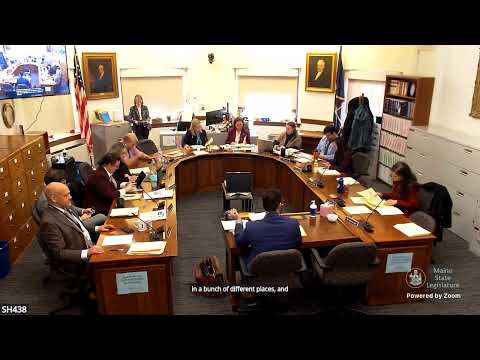
The Judiciary Committee held an extended hearing and work-session debate on a bill to set minimum security, employee‑vetting and training requirements for federally licensed firearms dealers (FFLs), require annual self‑certification to the Department of Public Safety (DPS), and give DPS authority to inspect premises for compliance.
Sponsor testimony cited ATF data showing firearms theft events and argued for reasonable, state-level business-practice standards (secure display, alarm systems, employee vetting). Margaret Groban (policy/legal expert) and an ATF factsheet were referenced; the ATF national data and a 2024 federal FFL theft-and-loss report were submitted to the record (the report shows 16 theft events in Maine for 2024 involving 50 firearms).
Lieutenant Matt (Department of Public Safety) said the department could implement the proposal only with additional positions and resources and urged including necessary positions in the bill or fiscal note; he estimated a minimum of four new positions (lieutenant, detectives and management analyst staff) to oversee and respond to compliance work. The department said inspections would be 'as needed' (response or compliance concerns) rather than routine annual inspections.
Industry and civil-rights representatives raised privacy and federal-law compatibility concerns: one industry witness warned the bill, as drafted, could create de facto statewide access to sensitive dealer records and recommended careful alignment with federal limits on access to FFL records. Committee members also questioned whether the bill would create a state-maintained database of dealer records or otherwise conflict with federal rules about access to transaction records.
A procedural motion to 'call the question' passed (9–2) to cut further debate and proceed to a vote. The committee then considered a package of amendments (including narrowing 'law enforcement' references to the Department of Public Safety, requiring fingerprint-based background checks, lowering a false-certification penalty, and adding departmental positions or an appropriation). A motion to adopt the proposed amendment failed (5 yes, 6 no). The committee closed the work session on the bill and adjourned for the day without reporting the bill out for passage.