Maine bill would align shore rules with FEMA to ease waterfront rebuilds after January 2024 storms
Loading...
Summary
LD2143 would make a targeted, technical change to municipal floodplain variance rules so damaged commercial fishery structures seaward of mean high tide can be rebuilt without triggering conflicts with the federal NFIP; the change removes a federal disaster declaration prerequisite and ties the state definition to 44 C.F.R. §59.1.
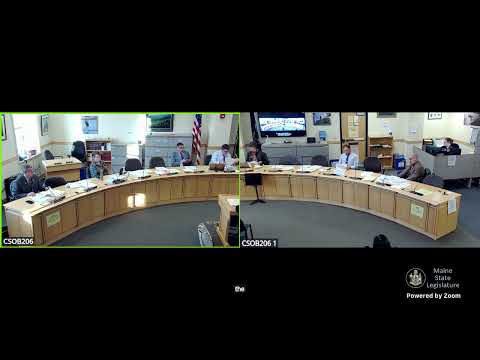
Senator/Chair Chip Curry opened the public hearing on LD2143, a bill the Maine Office of Community Affairs (MOCA) says is a narrow fix to help working waterfronts rebuild after storms and preserve communities’ eligibility for federal flood insurance.
President Daughtry and MOCA staff framed the bill as a correction to earlier emergency relief enacted after the January 2024 storms. A MOCA sponsor said the earlier law (LD1864, now public law chapter 286) addressed immediate barriers but introduced definitional inconsistencies with the federal National Flood Insurance Program (NFIP). Those inconsistencies, the sponsor warned, could jeopardize a community’s eligibility for federally backed flood insurance and mitigation assistance.
Joan Walton, director of MOCA’s Municipal Planning Assistance Program, testified that LD2143 would amend municipal board‑of‑appeals variance authority so petitioners seeking to rebuild substantially damaged structures placed seaward of mean high tide would not have to meet the statute’s ‘reasonable return’ undue‑hardship criterion if the structure is to be reconstructed for a functionally dependent use “as defined in 44 C.F.R. §59.1.” She told the committee LD2143 removes the requirement that a federal disaster declaration be in place for relief and makes that temporary exemption permanent while retaining protective elevation and minimum‑variance rules.
Committee members pressed technical questions about how narrowly the bill applies (coastal versus tidal rivers), how the federal definition of “functionally dependent use” differs from Maine’s shoreland zoning definition, and the meaning of terms such as “cargo” and “mean high tide.” Walton and the sponsor deferred some fine‑grained definitional questions to DEP and FEMA and asked to address them in the work session with the floodplain management coordinator.
The public hearing was closed after committee requests for staff from FEMA, DEP, and MOCA’s floodplain coordinator to join the work session. No formal vote was taken at the hearing; the committee flagged the item for follow‑up technical drafting and more detailed guidance from state and federal floodplain experts.
Next steps: the committee asked staff and agencies to surface precise regulatory language (including the NFIP cross‑references) and to provide technical witnesses at the scheduled work session.