Get Full Government Meeting Transcripts, Videos, & Alerts Forever!
Get email alerts on the North Jay Water Debt Limit topic
No spam. Unsubscribe anytime.
North Jay Water District asks Legislature to remove $900,000 debt cap to finance $11 million water-main replacement
Summary
Superintendent Benjamin Wright told the Energy, Utilities and Technology Committee that the North Jay Water District needs to eliminate a $900,000 charter debt limit to borrow for an estimated $11 million water-main replacement after repeated breaks; committee members pressed on rates, referenda and financing options.
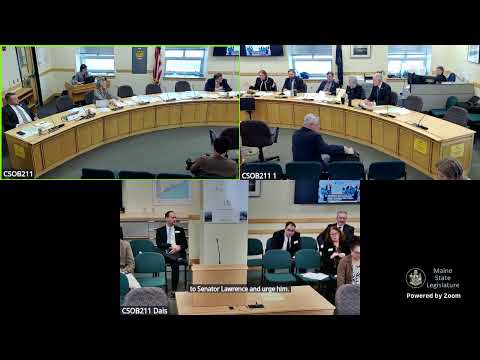
Sen. Mark Lawrence opened a public hearing Tuesday on LD 2041, a sponsor-filed measure to eliminate the $900,000 debt ceiling in the North Jay Water District charter so the utility can borrow for a planned water-main replacement.
Benjamin (Ben) Wright, superintendent of the district, told the Legislature's Energy, Utilities and Technology Committee that the system dates from the 1940s and has experienced 15 main breaks in the past 10 years (six in the last three years). He said the main consists largely of brittle asbestos-cement pipe and that emergency repairs and paving have cost the district roughly $200,000 over two years. Wright said engineers last planned to bid the larger replacement in December 2025 but delayed that work because the $900,000 debt limit would block access to state programs and lenders.
"The district needs to eliminate our current debt limit of $900,000 so we can borrow the money to fund an estimated $11,000,000 infrastructure project to replace the main," Wright said in testimony.
Committee members pressed Wright on whether the district had pursued a local referendum or consolidation with neighboring systems. Wright said trustees discussed a town referendum but did not pursue it because legislative relief would be timelier; he said the district has not held a public referendum on eliminating the limit. Wright estimated the system serves roughly 250 household customers (plus a few larger accounts) and said a conservative rate-impact estimate developed to date suggests about a 75% increase from current quarterly charges, pending final financing terms. He framed a longer-term financing strategy (longer amortization) as a way to moderate annual rate pressure.
Wright told lawmakers the district had recently been removed from a drinking-water program grant list in part because its finances showed repeated deficits and substantial out-of-pocket engineering costs, meaning the district must demonstrate improved fiscal footing to regain grant eligibility. He said the district is exploring options including the Maine Municipal Bond Bank and state revolving fund loans.
Rep. Melanie Sachs and others asked whether voters had been asked to approve removal of the cap; Wright said they had not. Rep. Kessler asked for typical monthly or quarterly impacts; Wright reiterated the 75% estimate is a preliminary figure and said the Maine Rural Water Association and other advisers are assisting on rate modeling.
The committee heard no opponents and closed the public hearing. No committee action or vote was taken at the hearing.
Next steps: the committee will consider the bill in work session; sponsor testimony and the district's financial details were submitted for that review.