
Panel tables pass‑through entity tax after questions about revenue, implementation
Get AI-powered insights, summaries, and transcripts
Subscribe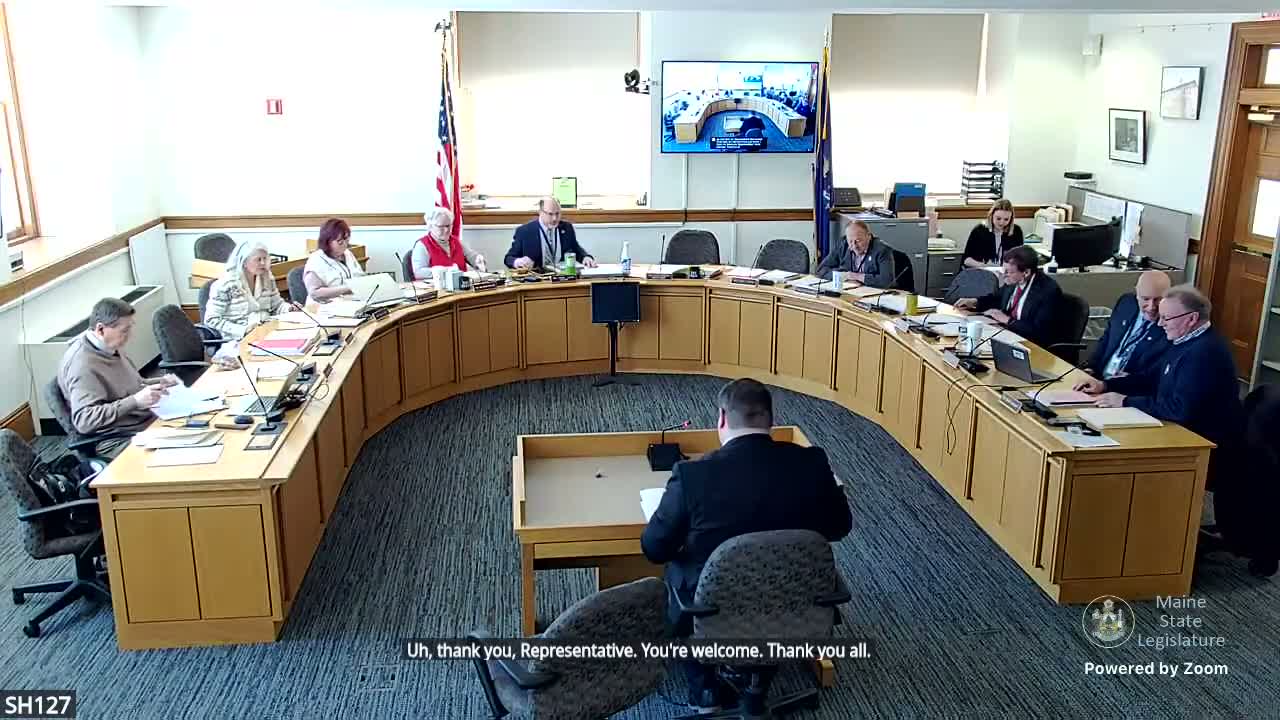
Summary
Lawmakers heard a CPA‑drafted amendment and MRS concerns on LD 191, a pass‑through entity tax designed to circumvent SALT limits. The committee asked for revenue analysis and implementation costs and tabled the bill pending MRS review.
The committee returned to LD 191, a pass‑through entity (PTE) tax intended to allow business owners to elect entity‑level tax payments and receive refundable credits in return. Analysts explained the mechanism: an electing PTE would pay tax at the highest individual rate; owners would receive a refundable credit equal to a large share of their share of tax paid.
John Block, representing the Maine Society of CPAs, introduced an amendment drafted by tax lawyers and CPAs that he described as clarifying the original bill rather than changing its overall policy: "This amendment really is not a dramatic departure from the original bill," Block said, adding that the amendment adds technical detail such as election mechanics and effective dates.
Maine Revenue Services advised it had not yet completed a fiscal review and noted implementation costs; a committee analyst cited an estimated implementation cost of about $500,000. The bill sponsor urged patience and recommended reconciling the design with the governor's pending budget and conformity work.
Given the outstanding questions about revenue impact and administration, Representative Anne Matlack moved to table LD 191 until later in the session. The motion carried by voice vote among members present; the committee asked MRS and analysts for a fiscal estimate and implementation cost breakdown before resuming consideration.
What's next: MRS will provide a fiscal estimate and the committee will assess whether changes in federal SALT policy alter the need or design for a state PTE tax.