
Senate passes hospital oversight bill tied to Christiana Care settlement; amendment approved
Get AI-powered insights, summaries, and transcripts
Subscribe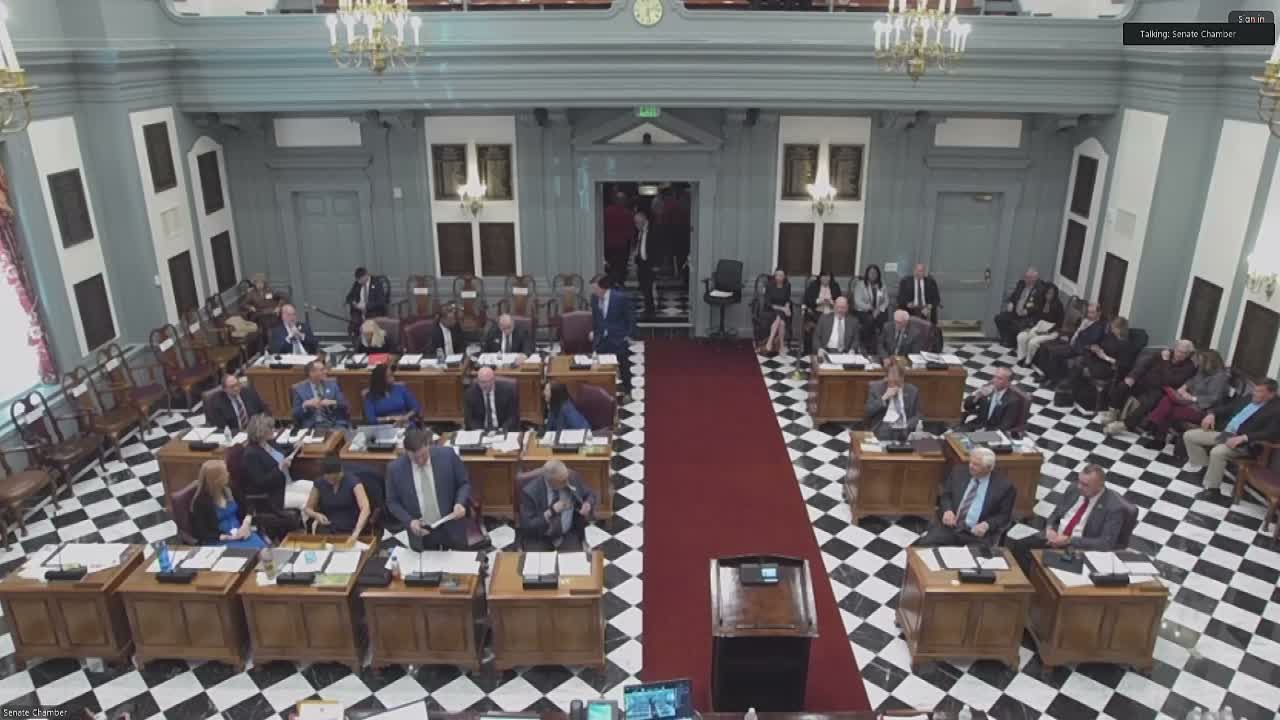
Summary
The Delaware Senate on Jan. 15 passed Senate Bill 213, the legislative product of a settlement with Christiana Care that changes hospital budget-review procedures, incorporating an amendment that narrows scope and creates options for meaningful cost-containment agreements. Passage will lead to dismissal of related litigation, sponsors said.
Senate Bill 213, legislation described by its sponsor as the product of a settlement between the Office of the Governor and Christiana Care, passed the Delaware Senate on Jan. 15 after the chamber approved an amendment to narrow and clarify provisions.
Senator Townsend, sponsor of the bill, told colleagues that SB 213 "represents, the settlement reach between the Office of the Governor and Christiana Care and the lawsuit that Christiana Care filed" and framed the measure as emphasizing front-end transparency and benchmark compliance plans rather than the prior bill's more intrusive budget-control mechanism.
"Passage of this bill would result in dismissal of the lawsuit," Senator Johnson said on the floor, describing how the settlement and the legislative vote are intended to pause litigation and let a statutory process for standards and tools proceed. Legislators and the sponsor said the bill also creates options for "meaningful cost containment agreements" (MCCAs), which would allow hospitals to pursue agreed-upon cost-reduction steps rather than entering the board's benchmark-control regime in all cases.
The Senate approved Senate Amendment 1 to SB 213 by roll call before taking up the final vote. Townsend described the amendment as a mix of technical cleanups and targeted changes, including an exception for certain long-term acute care hospitals and language meant to assure the Legislature that hospitals participating in MCCAs will be treated in a way that does not turn the oversight board into a quasi-enforcer of private contract terms.
During floor discussion senators pressed the sponsor and stakeholders on implementation timing and the board's role. Senator Manzaninos asked whether the litigation would be fully dismissed if the bill became law. Senator Hansen and Senator Johnson responded that the parties agreed to pause the litigation pending the Legislature's action, and that, if enacted and signed, Christiana Care would dismiss its lawsuit to allow the board to begin developing standards and tools.
Lawmakers also debated the practical timetable for compliance plans and board activity. "The bill pushes out the deadlines by a year," Senator Johnson said, acknowledging the litigation-related delay; he estimated that hospitals and the board could take 2-plus years to get to a point where compliance plans and standards are fully embedded and producing results.
Supporters said the bill and amendment strike a balance between transparency and workable compliance mechanisms; several senators voiced frustration with how the settlement was negotiated outside the chamber but said passage would at least begin work on reining in rising health-care costs. After a roll-call the Senate recorded 21 yes votes and the presiding officer declared SB 213, as amended, passed by the Senate.
The bill now proceeds to the House or to the signature process consistent with legislative procedure. The sponsor said the settlement and statutory changes are intended to produce greater transparency in hospital operations and a path to reduce health-care costs in the state.
Ending: The Senate approved SB 213 as amended and recorded a roll-call vote; proponents said enactment will lead to dismissal of related litigation and allow a gubernatorial board and hospitals to begin implementing compliance plans and MCCAs, with full effects expected to unfold over multiple years.