Get Full Government Meeting Transcripts, Videos, & Alerts Forever!
Get email alerts on the Government And Regulatory Reform.homelessness Street Camping topic
No spam. Unsubscribe anytime.
Panel approves amended ban on street camping; opponents warn of jail strain and lack of shelter capacity
Summary
The Regulatory Reform Committee approved an amended version of House Bill 1662, which would prohibit camping or long‑term sheltering on public land and create enforcement steps including warnings and a misdemeanor for repeat violations. Supporters called the measure a compassionate way to connect people to services; opponents — service providers, a
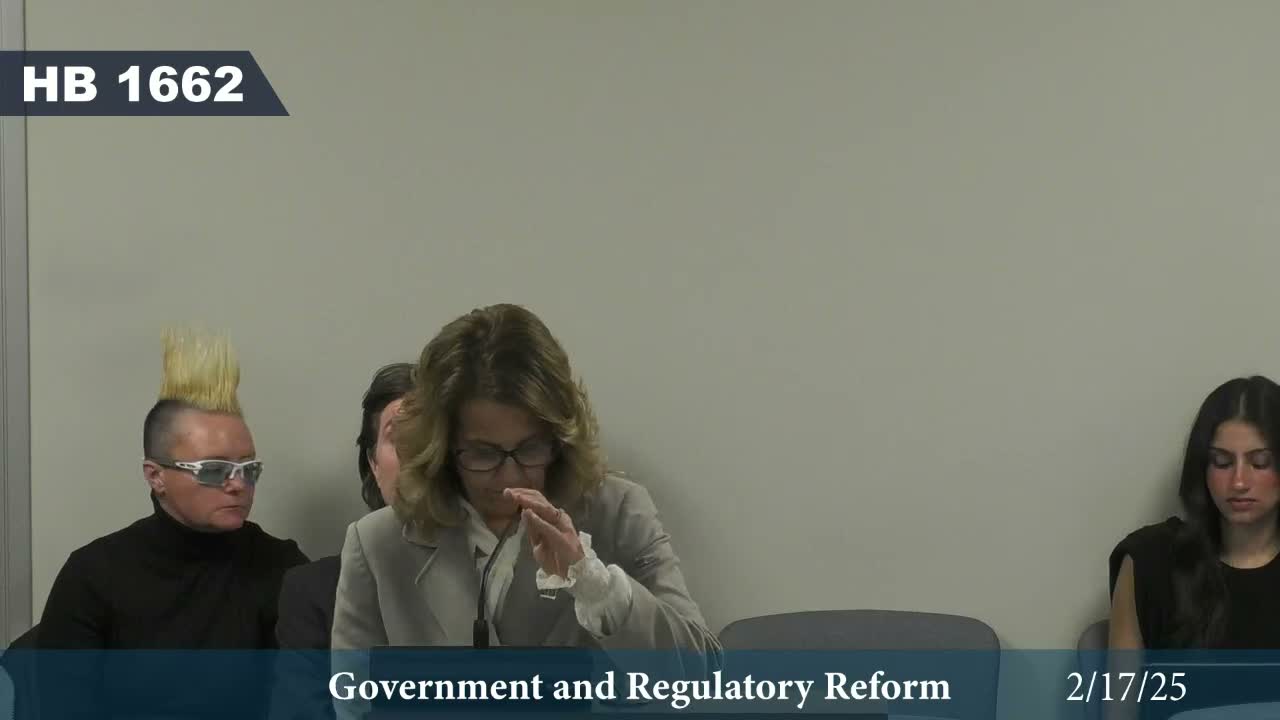
The Indiana House Regulatory Reform Committee voted to pass an amended version of House Bill 1662, a measure that would prohibit street camping on state or political‑subdivision land and establish enforcement steps for people found camping on public property.
Representative Michelle Davis, the bill sponsor, presented the measure as focused on public health and safety and said its intent is to offer a “proactive approach for people who are visibly struggling on our sidewalks and public property rather than one that lets them remain in dangerous circumstances.” The bill’s language, as amended in committee, requires a warning and, where available, transport or referral to an authorized shelter or services; repeat presence within 24 hours after a warning can be treated as a Class C misdemeanor under the amended text as adopted in committee.
The committee heard extended testimony from service providers, local officials and people with lived experience. Testimony opposing the bill stressed that many communities lack sufficient shelter beds and wraparound services and argued criminal penalties would worsen homelessness and result in repeated arrests rather than housing outcomes. Chelsea Herringcosy, executive director of the Coalition for Homelessness Intervention and Prevention, said “local control matters” and warned that jailing people “will not reduce street homelessness” and will instead create a “perpetual homelessness‑arrest‑incarceration cycle.”
Several witnesses described the limits of shelter capacity. Brandy Pirtle, who chairs an eight‑county continuum of care in southern Indiana, said the emergency shelter for those counties is “constantly full” and reported the shelter recently exceeded 70 people while its normal capacity was lower. Dawn Baldwin, who described herself as a 10‑year homelessness survivor, urged the committee to prioritize housing and supportive services and described how Housing First programs and supportive services enabled her to secure stable housing and recovery.
Representatives of housing programs and funders described evidence‑based alternatives. Reverend Forrest Gilmore, executive director of Beacon in Monroe County, recounted a long‑term outreach case that he said improved only after the person received housing and medical care through a Housing First approach. Chaka Coleman of the Indianapolis Foundation presented results from a “Housing to Recovery” initiative that the foundation said had kept 95 percent of participants stably housed.
Law‑enforcement and corrections groups raised operational concerns. A representative of the Indiana Sheriffs Association cautioned that increased arrests would strain county jails and staff and could trigger probation or parole violations that carry further penalties. Several committee members raised similar questions about capacity and unintended consequences.
Representative Bartlett offered an amendment to strip the bill and instead create a study task force to examine homelessness statewide; that amendment failed in committee, 4–9. After debate and the failed amendment, the committee moved the bill as amended; the chair announced the committee vote as 9–4 in favor.
Opponents and supporters both asked for additional clarity in the bill language on how enforcement and service referrals would work at the local level. Representative Davis said the measure “does not criminalize homelessness” and that it provides options before misdemeanor charges would apply. Critics said the committee should require assurances or funding for adequate shelter capacity and services before imposing enforcement steps that could lead to arrest.
The bill passed committee by a 9–4 vote and will proceed in the legislative process. Committee testimony and debate made clear continuing disagreements over how to balance public safety, municipal operations and the limited shelter and supportive‑service capacities available in many Indiana communities.