Get Full Government Meeting Transcripts, Videos, & Alerts Forever!
Get email alerts on the Statutory Reporting topic
No spam. Unsubscribe anytime.
Arkansas Revenue & Tax committee reviews agency reporting rules, directs staff to draft targeted repeals
Summary
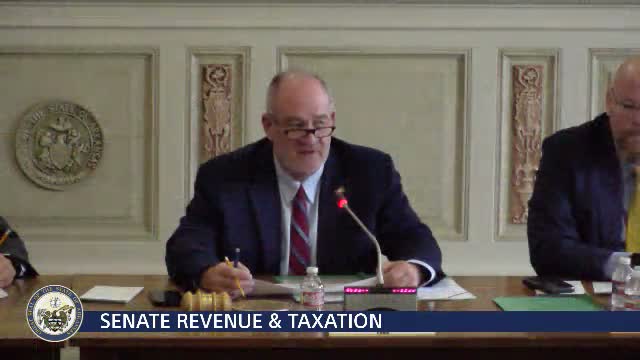
The Senate Revenue and Taxation Committee reviewed multiple statutory reporting requirements from ADFA, AEDC and the Tax Appeals Commission and directed staff to prepare repeal language for several low-value reports while keeping others that provide oversight on economic incentives.
The Arkansas Senate Committee on Revenue and Taxation met to review a slate of statutorily required agency reports and agreed to seek repeal of several reports it deemed redundant while retaining those tied to economic incentives and public oversight.
Committee members said the exercise aims to reduce unnecessary paperwork while preserving transparency for incentive programs. Senator Hester, who led the meeting, directed staff to work with agencies and prepare repeal language for specified reports and to arrange sponsors for the bills.
The committee discussed reports submitted by the Arkansas Development Finance Authority, the Arkansas Economic Development Commission and the Tax Appeals Commission. Mark Konon, president of the Arkansas Development Finance Authority, described the bond-issue fact sheet as a “simple report” that lists basic offering details such as the name, coupon and size of each bond issue and said the documents produced for public finance offerings (including TEFRA hearings and official statements published on EMMA) provide fuller information than the fact sheet. Konon said the ADFA rarely receives questions about the fact sheet and that the report provides only “the very bare bones of the transaction.”
ADFA staff recommended eliminating the bond-issue fact sheet and the committee directed bureau staff to prepare draft repeal language for that and other ADFA reports that the authority identified as low value. The committee also heard from ADFA about its capital access program report — a description of a small-business loan reserve that ADFA said functions only as a credit-enhancement pool and does not involve underwriting. ADFA reported an average loan size of about $39,000 and an average outstanding balance of about $31,000; the authority recommended eliminating that statutory report as well.
On the Arkansas Institutional Fund, ADFA said the vehicle has been in a wind-down phase since roughly 2017 after administrative functions were brought in-house and the state ceased new investments into that vehicle, moving new activity to the Arkansas Venture Capital Development Fund. ADFA said the institutional fund still holds about $3.5 million in equity investments and files annual tax and audit returns but has no ongoing investment activity. ADFA recommended removing the statutory reporting requirement for that fund; the committee instructed staff to prepare repeal language for consideration.
Representatives of the Arkansas Economic Development Commission (AEDC) told the committee they had three statutorily required reports under review. Clint O'Neil, executive director of AEDC, said the Amendment 82 “super projects” report (which currently covers only Big River Steel in Northeast Arkansas) tracks jobs retained and average hourly wage during an existing maintenance period. O'Neil said AEDC would continue to track that information because the project agreement requires it; the committee decided to keep the super-projects report in statute, noting legislators in the affected region use that information. Committee members noted the Big River Steel maintenance period runs through about 2033.
AEDC also asked to retain its annual December report, which O'Neil described as “the big report” that aggregates incentives signed in a calendar year, economic metrics, and multi-state comparisons. AEDC acknowledged the December report requires significant staff time and can lag because some economic data are not available for months after year-end, but recommended keeping the statutory requirement and streamlining internal processes to reduce staff burden. AEDC said the agency would try to fold other statutory reports into the December report where feasible.
On the quick-action closing fund report, AEDC described the fund as executive-branch discretionary money that the governor may use to close economic-development deals once the legislature appropriates money to the fund. AEDC said the most recent appropriation into that fund was $35,000,000 and that the governor has authority to deploy those funds without project-by-project approval from the Arkansas Legislative Council. The committee said that dynamic argues for keeping a statutory reporting requirement so the Legislature retains visibility; the committee kept the quick-action closing fund report in statute but also directed AEDC to consider consolidating reporting into the December report where practical.
Matt Bach, chief commissioner of the Arkansas Tax Appeals Commission, told the committee his panel’s annual report is a small management exercise that takes roughly “10 hours, 10 hours a year to prepare.” The commission publishes redacted decisions online; Bach said the annual report compiles caseload statistics that would otherwise require manual collection by outsiders. The committee opted to keep the Tax Appeals Commission annual report in statute.
Committee members and agency representatives emphasized the distinction between eliminating a statutorily required report and eliminating the underlying oversight or enforcement mechanisms tied to incentive agreements. Several senators noted that contractual clawbacks and agreement terms remain enforceable even if a duplicative legislative report is removed. Where reporting was deemed unnecessary or duplicative, the committee asked staff to draft repeal language and to secure legislative sponsors — Senate sponsor Senator Crowell was mentioned — and noted that staff would seek a House sponsor as well.
The committee did not take formal recorded roll-call votes at the meeting; instead members directed staff to prepare draft repeal bills for certain reports, to retain other reports tied to incentive oversight, and to schedule follow-up meetings to review additional statutory reports that agencies subsequently provided to staff.
The committee asked agencies to deliver outstanding reports and fiscal impacts to staff for review ahead of the next meeting. Senator Hester closed the session by saying staff will prepare draft language and that the committee will reconvene to consider those drafts and related fiscal analyses.