Get Full Government Meeting Transcripts, Videos, & Alerts Forever!
Senate committee advances five measures tightening ballot-initiative signature rules; one fails
Summary
A Senate committee voted to adopt five bills that change how petition signatures are collected, verified and investigated in Arkansas. A sixth measure to give the secretary of state greater investigative powers failed on a roll call.
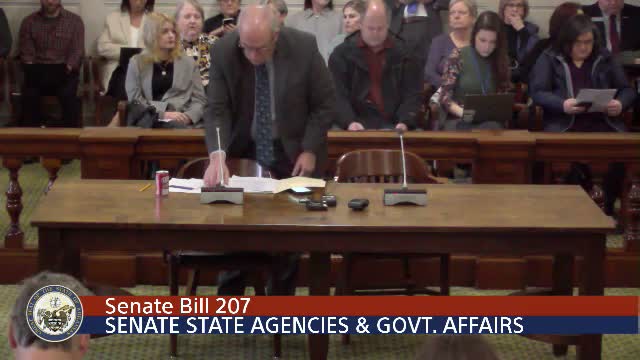
The Senate State Agencies & Governmental Affairs Committee on Wednesday approved five bills aimed at tightening rules for gathering and verifying ballot-initiative signatures and rejected one measure that would have expanded the secretary of state's investigatory authority.
Sen. Blake Hammer, sponsor of the six-bill package, told the committee the measures were intended to "enhance the integrity process by which initiatives are ... offered to the citizens of Arkansas" and said the bills were drafted with input from the secretary of state's office and reviewed by the attorney general's office. "I hope that you will vote on the side of the facts," he said during his opening remarks.
The measures cover requirements for canvassers, voter-identification checks for petition signers, criminal penalties for petition fraud, an affidavit requirement for canvassers, and a clarification that signatures obtained criminally may be disqualified. One bill to create a document-validity division within the secretary of state's office and give that division explicit investigative tools failed on a roll call vote.
Why it matters: Ballot initiative petitions are the legal gateway for citizen-initiated measures to reach the ballot. The bills would change who is required to perform what verification, how the secretary of state's office can evaluate and remove suspect signatures, and what criminal consequences canvassers may face. Supporters said the changes will prevent misleading solicitations and duplicate or fraudulent signatures; opponents said the measures will chill volunteer petitioning, burden grassroots campaigns and expand state authority over speech and petition activity.
Key provisions discussed
- Reading ballot title (SB 210): The bill requires a canvasser not to accept a signature unless the signer has read the ballot title or the ballot title has been read aloud in the signer's presence. Hammer said the measure is intended to stop people being "tricked into signing petitions" by misleading descriptions. Secretary of State Director of Elections Leslie…
Already have an account? Log in
Subscribe to keep reading
Unlock the rest of this article — and every article on Citizen Portal.
- Unlimited articles
- AI-powered breakdowns of topics, speakers, decisions, and budgets
- Instant alerts when your location has a new meeting
- Follow topics and more locations
- 1,000 AI Insights / month, plus AI Chat