Get Full Government Meeting Transcripts, Videos, & Alerts Forever!
Get email alerts on the Elections Ballot Initiative Rules topic
No spam. Unsubscribe anytime.
Senate committee advances five measures tightening ballot-initiative signature rules; one fails
Summary
A Senate committee voted to adopt five bills that change how petition signatures are collected, verified and investigated in Arkansas. A sixth measure to give the secretary of state greater investigative powers failed on a roll call.
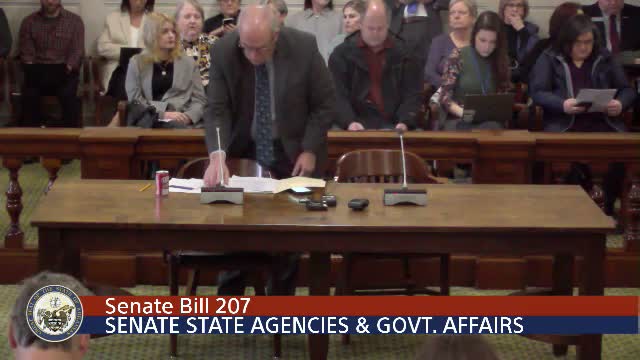
The Senate State Agencies & Governmental Affairs Committee on Wednesday approved five bills aimed at tightening rules for gathering and verifying ballot-initiative signatures and rejected one measure that would have expanded the secretary of state's investigatory authority.
Sen. Blake Hammer, sponsor of the six-bill package, told the committee the measures were intended to "enhance the integrity process by which initiatives are ... offered to the citizens of Arkansas" and said the bills were drafted with input from the secretary of state's office and reviewed by the attorney general's office. "I hope that you will vote on the side of the facts," he said during his opening remarks.
The measures cover requirements for canvassers, voter-identification checks for petition signers, criminal penalties for petition fraud, an affidavit requirement for canvassers, and a clarification that signatures obtained criminally may be disqualified. One bill to create a document-validity division within the secretary of state's office and give that division explicit investigative tools failed on a roll call vote.
Why it matters: Ballot initiative petitions are the legal gateway for citizen-initiated measures to reach the ballot. The bills would change who is required to perform what verification, how the secretary of state's office can evaluate and remove suspect signatures, and what criminal consequences canvassers may face. Supporters said the changes will prevent misleading solicitations and duplicate or fraudulent signatures; opponents said the measures will chill volunteer petitioning, burden grassroots campaigns and expand state authority over speech and petition activity.
Key provisions discussed
- Reading ballot title (SB 210): The bill requires a canvasser not to accept a signature unless the signer has read the ballot title or the ballot title has been read aloud in the signer's presence. Hammer said the measure is intended to stop people being "tricked into signing petitions" by misleading descriptions. Secretary of State Director of Elections Leslie Bellamy told the committee the office receives many calls from voters who say they were misinformed while asked to sign petitions. Several public commenters said they saw canvassers hand out signature sheets without providing the ballot text; one witness said petition clipboards were circulating with nothing attached.
- Photo ID for petition signing (SB 208): The bill would require the same photo identification used for voting when someone signs a petition. Hammer and backers said the requirement would reduce duplicated or fraudulent signings; Bellamy said the secretary of state's office would absorb any additional workload without adding staff. Committee members asked whether the bill conflicts with a constitutional provision that "no other affidavit or verification shall be required" for petition signatures; proponents argued the requirement is analogous to voter-ID rules at the ballot box. The bill does not include a separate statutory "cure" for lack of ID.
- Petition-fraud penalty (SB 207): The bill reasserts that petition fraud is a Class A misdemeanor and adds language intended to hold canvassers to a higher standard of accountability when they solicit signatures. Sponsors said they are responding to reports that canvassers asked people to sign without showing them the proposed measure.
- Canvasser affidavit and collection rules (SB 211): This measure would require canvassers to sign a sworn statement about their conduct and contains provisions limiting when canvassers may continue to collect signatures while a sponsor seeks a cure or amendment. Committee members asked whether the bill changes current practice; the secretary of state's office said it would alter some timelines for canvassers' final affidavits.
- Criminally obtained-signature disqualification (SB 209): The sponsor described this bill as clarifying that signatures obtained by criminal conduct would be disqualified by the secretary of state using a preponderance-of-the-evidence standard; proponents said that raises the evidentiary burden above current "on its face" review.
- Investigative authority for the secretary of state (SB 212) — failed: The bill would have created a document-validity division inside the secretary of state's office with authority to subpoena documents, compel testimony and declare individual documents invalid if fraud is found by a preponderance of the evidence. The committee held extended questions about subpoena power, compelled testimony and whether compelled statements would be immunized; some members expressed separation-of-powers concerns. On a roll-call vote the bill failed: Sen. Hammer, Sen. Sullivan and Sen. Dodson voted in favor along with the chair; Sen. Tucker, Sen. King and Sen. Payton opposed the measure.
Public testimony and concerns
Dozens of Arkansans spoke for and against the bills during the committee hearing. Supporters and some witnesses described instances they said showed petition-signing abuses: signatures gathered without the ballot text attached, individuals told inaccurate descriptions of amendments, and young or paid canvassers who could not answer substantive questions about measures. "They were not asked every time if they wanted to read the amendment," said Vicky Parker, who testified about petitioning during last year's abortion-related initiative drive.
Opponents warned the bills would have a chilling effect on volunteer canvassers and grassroots campaigns. Several speakers and the League of Women Voters of Arkansas argued the requirements would impose burdens on ordinary citizens who carry petitions and equate to additional government regulation of core political speech. "When you ask a person to sign a petition ... that is speech," said attorney Jen Standefer, who testified for Arkansas Appleseed. Some speakers also raised administrative questions about the cost and capacity of the secretary of state's office to perform new investigative duties.
Votes at a glance
- SB 210 (reading ballot title before signature): Adopted by committee (motion to adopt made by Sen. Hammer; second by Sen. Sullivan). Voice vote; committee chair announced adoption. - SB 208 (photo ID for petition signing): Adopted by committee (motion to adopt by Sen. Hammer; second by Sen. Sullivan). Voice vote; committee chair announced adoption. - SB 207 (petition-fraud penalty reinforcement): Adopted by committee (motion to adopt by Sen. Hammer; second by Sen. Sullivan). Voice vote; committee chair announced adoption. - SB 211 (canvasser affidavit / collection rules): Adopted by committee (motion to adopt by Sen. Hammer; second by Sen. Sullivan). Voice vote; committee chair announced adoption. - SB 209 (disqualify criminally obtained signatures by preponderance): Adopted by committee (motion to adopt by Sen. Hammer; second by Sen. Sullivan). Voice vote; committee chair announced adoption. - SB 212 (create document-validity division / investigative authority): Failed on roll call (Aye: Hammer, Sullivan, Dodson, Chair; No: Tucker, King, Payton). The committee chair cast a deciding aye but the motion did not carry.
What the committee did not decide or clarify
Committee questioning revealed several unresolved implementation and legal questions: whether a statutory "cure"/appeal should be codified rather than remaining a secretary-of-state practice; how much additional staff or budget, if any, would be required to support new investigative duties; and whether giving the executive branch unilateral authority to disqualify signatures by a preponderance-of-evidence standard raises separation-of-powers concerns. Members also asked about protections for people with disabilities and non-English speakers if the bill requires an oral reading of a ballot title before a signature is accepted.
Next steps
The five bills that passed the committee will move to further consideration under Senate rules; SB 212 may be refiled or revised. Supporters said the attorney general's office had reviewed the package and stood ready to defend the measures in court. Opponents said litigation was likely. The bills, if enacted, would change the mechanics of how petition signatures are gathered and verified across Arkansas and are likely to prompt further legal and administrative debate.