Get Full Government Meeting Transcripts, Videos, & Alerts Forever!
Get email alerts on the Health Care Consolidation topic
No spam. Unsubscribe anytime.
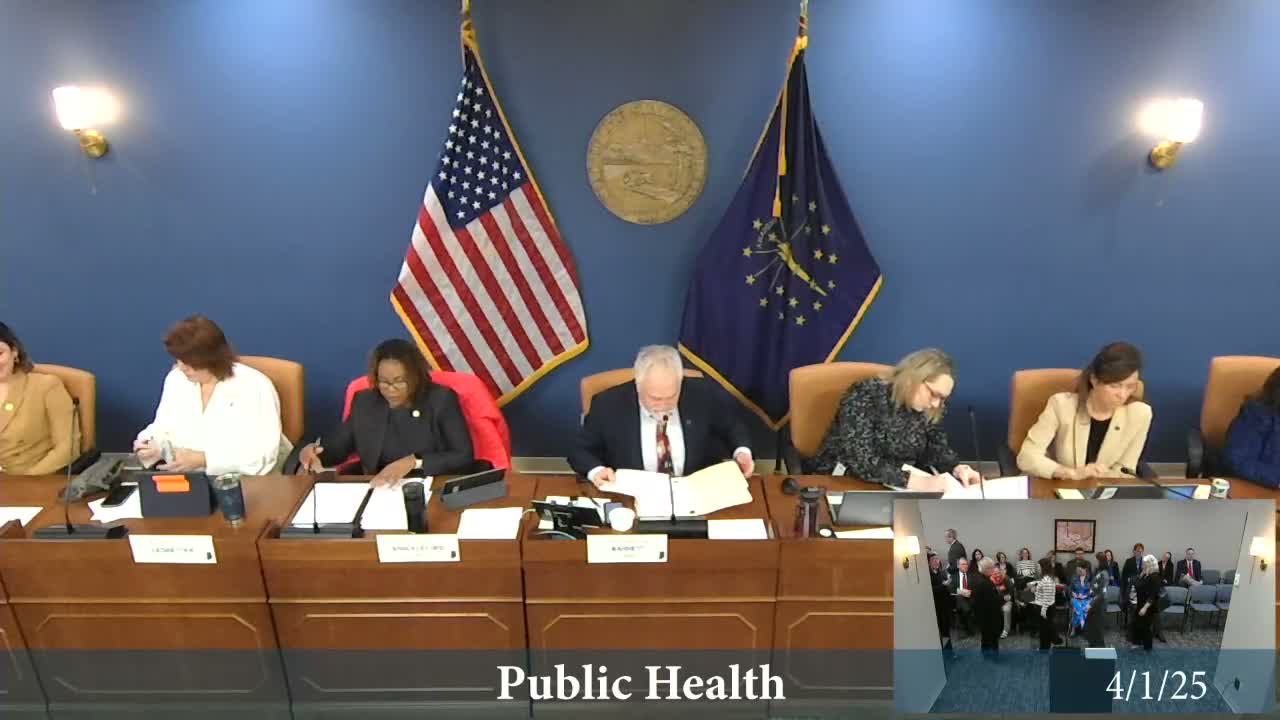
Committee advances COPA bill for Terre Haute hospitals after testimony from local leaders and health-system CEOs
Summary
The committee passed an amended bill that closes the COPA application window and moves the sunset date; supporters said Union Health’s acquisition of Terre Haute Regional Hospital will preserve jobs and deliver capital investments. Opponents and questions focused on limiting future COPA use and state versus federal oversight.
The committee voted to pass, as amended, Senate Bill 119, legislation that adjusts the state’s Certificate of Public Advantage (COPA) framework as applied to a pending application involving Union Health and Terre Haute Regional Hospital.
Senator Greg Goode and Representative Bob Heaton opened testimony urging committee support to protect services and local jobs in West Central Indiana. Steve Holman, CEO of Union Health, described the joint COPA application as a tool to “pursue, strengthen, elevate health care for the people of the Wabash Valley.” Holman told the committee Union Health expects to invest more than $105,000,000 across campuses over five years, to commit to enforceable community obligations and to preserve about 600–700 jobs if the acquisition succeeds.
Holman said the application includes 45 enforceable obligations monitored by the state, price controls for an initial period and immediate reductions tied to existing chargemasters. He said the COPA framework would allow the merged system to invest in ICU capacity, oncology technology, recruitment of primary care and specialty providers, expanded behavioral-health capacity and community access programs such as pop-up clinics and food-access points.
Alan Levine, CEO of Ballad Health, testified by invitation about his system’s experience with state-reviewed mergers in Tennessee and Virginia, arguing that state supervision of select hospital consolidations can preserve access in fragile rural markets and improve outcomes. Levine cited published peer-reviewed reductions in trauma deaths and programmatic investments Ballad Health made after consolidation.
Local leaders — Kristen Craig of the Terre Haute Chamber of Commerce and Vigo County Commissioner Mark Clinkenbeard — told the committee the merger would preserve jobs and support the local economy.
Opposition concerns and committee questions centered on: whether the bill’s language should permanently limit future COPAs; the appropriate duration and enforceability of price controls (the sponsor said the bill includes a 5-year stipulation in statute but Holman said the parties had proposed a longer 7-year commitment to the state); and ensuring the pending application would not be disrupted by statutory changes. The sponsor noted an amendment moving the application closure date from a retroactive February date to May 13, after sine die, to allow the executive branch time to act.
After roll call, the committee recorded passage of the bill as amended by a 10–1 vote. Representative Issa was recorded as the lone no vote. The sponsor told the committee the bill primarily advances three steps: move the sunset date, close the application process prospectively, and allow the attorney general’s office to consult with the Department of Health in review.
Votes at a glance: recorded votes included Representative Shackleford (yes), Representative Bauer (yes), Representative Porter (aye), Representative McGuire (yes), Representative Carbaugh (yes), Representative Goss Reeves (yes), Representative Hostetler (aye), Representative Issa (no), Representative King (yes), Representative Ledbetter (yes) and Representative Barrett (yes). The committee reported the motion carried 10–1.
The committee debate reflected a balance between preserving local hospital capacity through state-monitored agreements and the concern that limiting future COPA authority could eliminate a tool for other distressed hospital situations; several members asked for continued oversight language and safeguards.