Get Full Government Meeting Transcripts, Videos, & Alerts Forever!
Get email alerts on the Fssa Agency Waivers Dsp topic
No spam. Unsubscribe anytime.
FSSA agency bill prompts debate over waiver realignment, DSP registry fees and managed-care payment delays
Summary
House Bill 1474, the Family and Social Services Administration agency bill, realigns waiver administration and creates a direct support professional (DSP) registry and training fund. Committee debate highlighted provider concerns about long delays in managed-care payments to nursing homes and assisted-living providers and questions about the DSP-fe
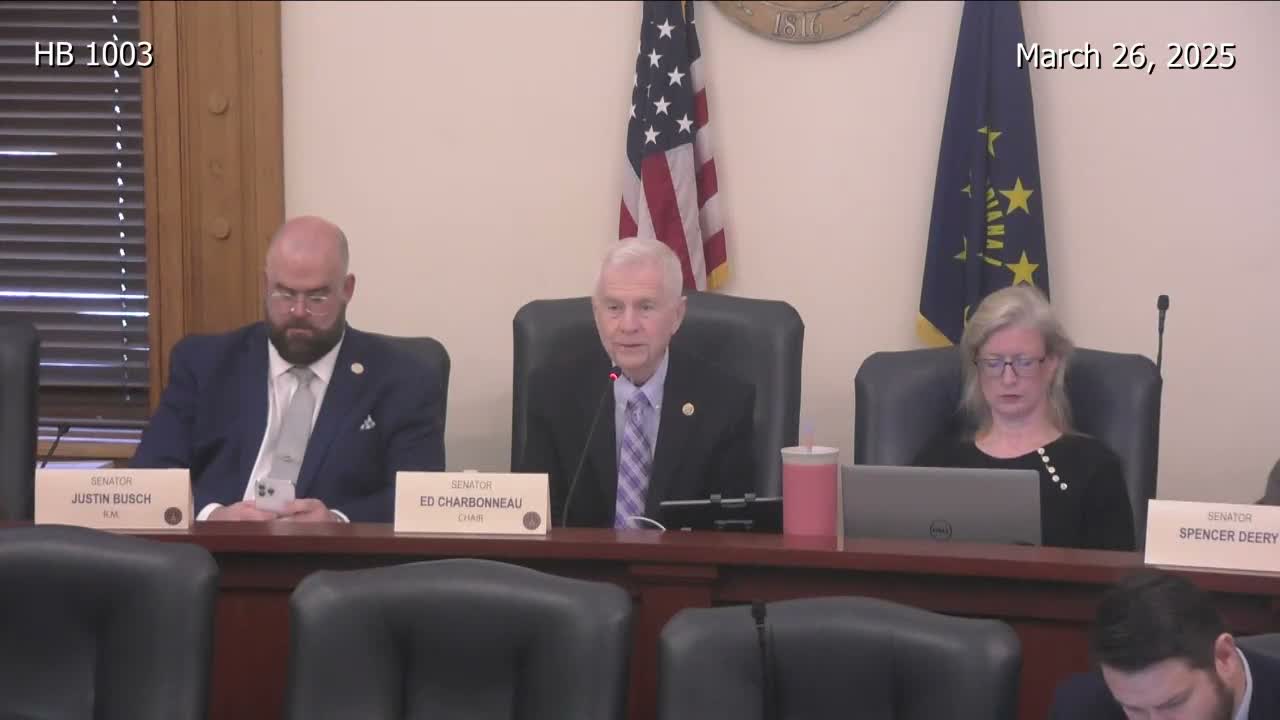
The Senate Health Committee considered House Bill 1474, the FSSA agency bill, which reorganizes administration of several waivers and creates a fee-backed direct support professional (DSP) registry and training program.
What the bill does
FSSA and division reorganization — The measure realigns waiver administration, moving some waiver responsibilities and the oversight of disability supports into FSSA’s disability bureau. FSSA interim legislative director Kayla Skinner told the committee the bill "effectuates waiver realignment from the division of aging to the bureau of disability services" and updates ombudsman authority, interpreter services rulemaking and uniform level-of-care tools for waivers.
Direct Support Professional (DSP) training and registry — The bill authorizes a fee to support a statewide DSP training program and a registry. Skinner told the committee the program would assess a cap on fees: a $500 charge per DSP and a $2,000 cap per provider for use of the training and registry services; FSSA said providers can run their own training but paying into the registry would be required for registration under the proposed model.
Claims denials and managed-care payments — Multiple providers and trade groups used the hearing to report lengthy delays and unpaid claims since the state rolled out managed-care entities (MCEs) for long-term care populations. Vince McGowan of Hoosier Owners and Providers for the Elderly said the rollout has resulted in months‑long unpaid claims and urged the legislature to consider returning to fee‑for‑service or to provide stronger enforcement and contract remedies. Nick Goodwin of the Indiana Health Care Association told the committee the industry documents roughly $100 million in untimely or unpaid claims linked to the rollout and urged stronger claim-review authority and penalties for unjustified denials.
Committee amendments and actions
The committee adopted amendments that direct additional claims reviews and call for external review triggers when large percentages of denials are later reversed. The committee passed the amended bill and recommitted it to appropriations by roll call (8-3).
Voices and examples
Providers testified that payment delays have tangible operational impacts, including missed payroll and care disruptions. "Managed care companies... manage rate. They manage cash flow," Vince McGowan said, adding that his sector has seen claims from July still unpaid and calling the rollout "an abject failure." Nick Goodwin summarized the industry's tally: "We estimate that we're owed about $100,000,000 in untimely and frankly unpaid claims as a part of the rollout of this program."
Family and waiver concerns
A parent and waiver recipient, Amber Sermersheim, urged the committee to remove language in the bill that would permit consideration of a family's resources when developing an individual service plan. Sermersheim said such a change would potentially limit access to services for children on the family supports waiver and asked the committee to keep waiver eligibility and services centered on person-level needs.
Next steps
The committee sent the amended FSSA bill to appropriations for budget and implementation review. Committee members and stakeholders said they expect further work, especially on pathways rollout fixes, DSP training implementation and a claims-review process to address MCE denials and payment timing.