Get Full Government Meeting Transcripts, Videos, & Alerts Forever!
Get email alerts on the Pole Attachments Broadband topic
No spam. Unsubscribe anytime.
Committee considers amendment to speed pole‑attachment process as federal broadband funds arrive
Summary
A proposed amendment would require utilities and telecoms to reach a signed agreement by Oct. 1 and set timelines for permitting, make‑ready payments and project completion tied to federal broadband funding. Electric cooperatives and telecom representatives clashed over penalties and operational feasibility.
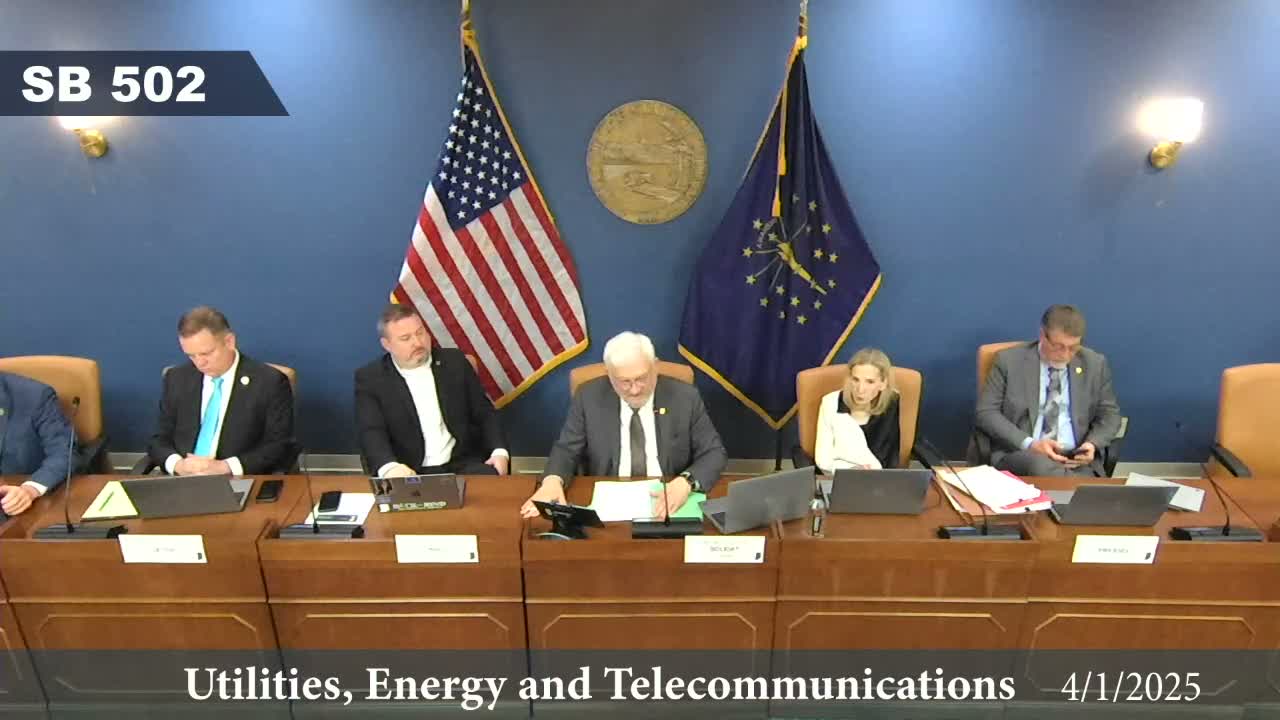
The Utilities, Energy and Telecommunications Committee heard detailed testimony and an amendment proposal focused on accelerating pole attachments and rural broadband deployment as federal and state funding becomes available. Committee leadership presented an amendment that would require utilities and telecommunications providers to reach a signed inter‑party agreement by Oct. 1 and establish mandatory timelines for notification, permitting and project completion when government funds are involved.
Under the amendment as described by the chair, an entity that signs a state contract to deploy broadband must publish the contract on its website within five days and meet with the pole owner within 60 days to coordinate engineering and make‑ready requirements. The amendment would require an attaching provider to submit permit applications within 24 months of contract signing; the pole owner would have six months to approve, partially approve or deny the application and provide a detailed explanation for any denial. If make‑ready work is required, the attaching entity would owe the costs and must pay within 60 days. The amendment would also impose an 18‑month deadline for project completion and create an enforcement framework, including a possible penalty the chair described as $250,000 for delays tied to the attaching entity or other failures to meet timelines.
Senator Zay and Chair Soliday emphasized urgency because of expected federal funding. Senator Zay noted the federal Infrastructure Act and the BEAD (Broadband Equity, Access and Deployment) funding that will send substantial grants to Indiana and argued that timelines and accountability are needed so rural residents receive service quickly. "If we can't get this solved, it's the rural person who needs broadband," the chair said, citing children doing homework at fast‑food restaurants and urging stakeholders to finalize a workable process.
Electric cooperative representatives, led by Michael Charbonneau of the Indiana Electric Cooperatives, opposed the amendment’s penalties and expressed concern that the timelines and fines would place disproportionate risk on pole owners. Charbonneau said co‑ops have invested hundreds of millions of dollars to prepare infrastructure and that joint‑use and make‑ready work involves detailed safety and engineering reviews. "Joint use issues are complex transactions of rights, responsibilities for maintaining the infrastructure's safety and reliability," he said, asking the committee to defeat the amendment or refine it.
Kerwin Olson of CAC echoed concerns that the amendment could convert a pilot into an open‑ended mandate and said cooperatives and pole owners already face potential liabilities when attaching entities do not follow correct practices. Cooperatives told the committee they have seen large single requests for attachments — witnesses cited examples of requests for 1,000 to 2,500 poles — and said the volume creates operational and engineering challenges.
Committee members pressed witnesses on whether the October deadline was achievable and what specific changes would address delays. Some members said they favor a legislative solution because the BEAD rollout will produce a surge of grant‑funded projects that must be coordinated. Others said the legislature should avoid imposing rigid penalties if industry stakeholders can reach voluntary, commercial solutions.
No committee vote was taken on the amendment. Chair Soliday said he would continue work with stakeholders and hold further hearings; he adjourned the session after additional procedural discussion. Committee staff and stakeholders said they will continue negotiating draft language and timelines ahead of the next meeting.