Get Full Government Meeting Transcripts, Videos, & Alerts Forever!
Get email alerts on the Rx Kids Cash Prescription topic
No spam. Unsubscribe anytime.
Physician and researchers describe Rx/ARCS Kids cash‑prescription program and early results
Summary
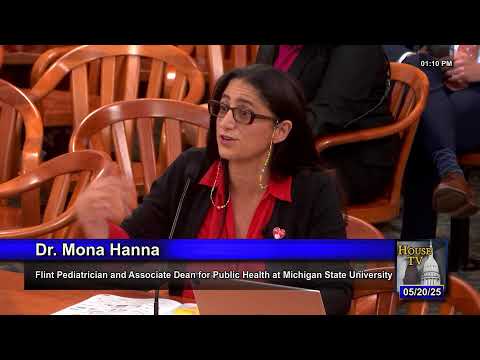
Dr. Mona Hanna of Michigan State University told the House Families and Veterans Committee that the Rx/ARCS Kids cash‑prescription program — a public‑private effort using TANF NRST authority and philanthropy — has delivered cash to mothers and babies, improved prenatal care and reduced some costly outcomes in pilot communities.
Dr. Mona Hanna, a pediatrician and associate dean for public health at Michigan State University, told the House Families and Veterans Committee that a cash‑prescription program for pregnant mothers and newborns produced measurable benefits in pilot communities and that the model is ready to expand.
Hanna said the program, introduced in Flint in January 2024 and referred to in testimony both as "Rx Kids" and "ARCS Kids," provides a $1,500 cash payment during pregnancy and then $500 a month after birth for either six or 12 months depending on local funding. She said the design leverages a provision of the Temporary Assistance for Needy Families (TANF) program — nonrecurring short‑term benefits (NRST) — for the initial payments to low‑income families and uses philanthropic and local public funds to extend and make the program universal in participating communities.
"This program made my family whole again," Hanna said, recounting a participant whose recovery and parenting were supported by the cash prescriptions and who regained custody of older children. She said the program is a "plug and play" public‑private partnership, administered operationally by GiveDirectly, that requires minimal staff and uses technology for enrollment and payments.
Hanna summarized outcome data from pilot communities: higher prenatal‑care uptake and earlier initiation of care, reduced smoking during pregnancy, improvements in birth weight and gestational age, fewer costly neonatal intensive‑care unit (NICU) admissions, improved maternal mental health and a decline in child‑welfare allegations in the studied areas. She said those reductions translate into cost savings, that a Flint‑area analysis estimated about a 1.57 return on investment in local economic activity, and that state‑level modeling of a subset of outcomes suggested large potential savings (Hanna described a state‑scale estimate but did not present a line‑by‑line fiscal analysis in committee testimony).
Hanna told legislators the program has prescribed cash directly to families (she said $10,000,000 had been prescribed at the time of testimony) and that the initiative had secured large commitments of public and private funding for expansion (she described commitments in the tens of millions of dollars but did not list a current bank balance). She said program overhead did not exceed about 15 percent and that GiveDirectly handles payments to reduce administrative costs.
Representatives asked about eligibility, federal funding risks and program duration. Hanna said the NRST TANF provision permits the first four months of payments to be delivered as short‑term benefits to eligible low‑income families without affecting lifetime TANF limits or work exemptions for that limited window; philanthropy is used to cover universal access in participating communities. On the duration question, she said Flint and Kalamazoo operate prenatal through 12 months of age where local funding makes that possible, while many other communities have funded six months of postnatal payments.
Committee members asked about oversight, duplication with existing programs and whether cash could be used for substances. Hanna said data show decreases in substance use in the pilot sites and that the cash transfers were designed to avoid counting as income that would jeopardize other benefits such as Medicaid, SNAP or WIC. She said philanthropic funds are used when communities allow noncitizen enrollments, while TANF dollars were limited to those eligible for federal benefits.
Hanna said program evaluation and longitudinal research are planned or under way, and that administrative matches to birth certificate data allow high enrollment verification and population‑level measurement in participating communities. She urged continued funding and expansion and noted that the governor’s executive budget included more TANF funding for rollout.
Several representatives complimented the program’s simplicity and early results, asked technical and budgetary questions, and requested follow‑up data on uptake, long‑term outcomes and the program’s fiscal commitments and cash‑on‑hand.