Get Full Government Meeting Transcripts, Videos, & Alerts Forever!
Get email alerts on the Legislation Dei K12 topic
No spam. Unsubscribe anytime.
Sponsor urges ban on DEI policies in K–12; committee members raise questions about scope and equity
Summary
Senator Blessing, sponsor of Senate Bill 113, urged the committee to prohibit diversity, equity and inclusion policies in public K–12 schools, arguing DEI promotes racial preferences and undermines merit. Committee members questioned whether the bill would interfere with federal civil‑rights laws, special education, English‑learner services and gap
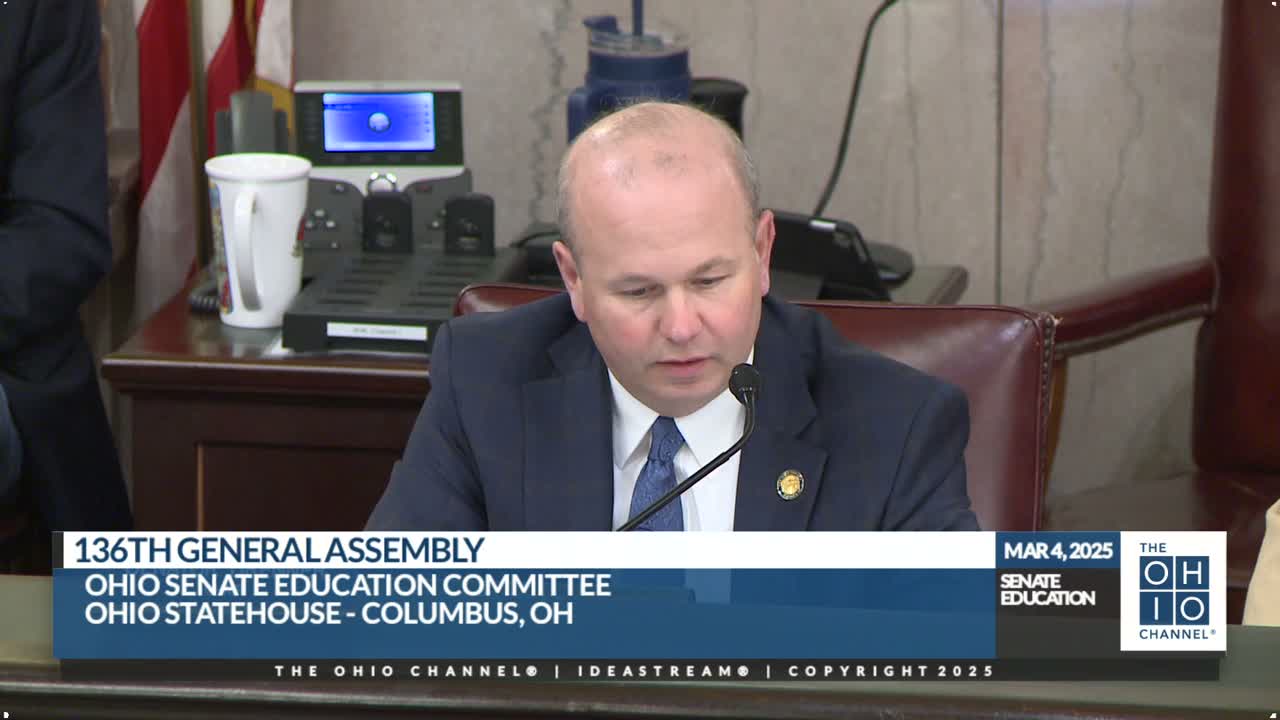
Senator Blessing, the bill sponsor and vice chair of the committee, presented sponsor testimony on Senate Bill 113, which would prohibit diversity, equity and inclusion (DEI) policies in Ohio public K–12 schools.
“The legislation will prohibit diversity, equity, and inclusion policies in public schools,” Blessing said, telling the committee he believes DEI “prioritizes identity over ability” and “promotes racial preferences over fairness.” He framed the bill as restoring merit‑based standards and cited the U.S. Supreme Court’s 2023 Students for Fair Admissions decision in support of his argument.
Nut graf: The sponsor described the bill as a measure to remove DEI‑focused orientation/training, DEI offices, and DEI language from job descriptions in K–12 schools. Several senators challenged the sponsor on practical consequences for compliance with federal civil‑rights laws, services for students with disabilities, English‑learner programming and programs intended to increase opportunity for underrepresented students.
Key points from testimony and questioning
Blessing said the bill would not alter compliance with federal civil‑rights laws. In response to Senator Smith’s question about whether the bill would make it illegal to post a job for transporting students with disabilities, Blessing replied that existing federal protections such as the Americans with Disabilities Act would continue to be enforced and that the bill would not prohibit ADA‑required accommodations.
When pressed about whether the bill would affect English‑learner positions or College Credit Plus access, Blessing said those positions would not be covered by the bill’s prohibition. He repeatedly framed DEI as a political agenda seeking equal outcomes rather than equal opportunity.
Ranking Member Ingram and other senators raised broader concerns about whether eliminating DEI language would help address longstanding disparities in attainment and whether the committee should instead pursue targeted steps to close achievement gaps. Ingram asked whether the sponsor believed there were students starting at different places because of historical disadvantage; Blessing acknowledged historical disadvantage but said the bill is not intended to address attainment gaps and asserted that DEI “is a political agenda trying to get equality of outcomes.”
Procedure and next steps
The hearing concluded after proponent testimony and questions; senators continued to debate the bill’s scope and policy implications during questioning. No committee action or vote was taken at the hearing.
Ending
Senators asked follow‑up and some offered to work with the sponsor on separate legislative changes (for example, College Credit Plus adjustments) rather than folding those issues into SB 113. The record shows a clear divide in committee views about the policy goals and likely effects of banning DEI policies in K–12 settings.