Get Full Government Meeting Transcripts, Videos, & Alerts Forever!
Get email alerts on the Land Use topic
No spam. Unsubscribe anytime.
Sherwood planning commission sets 2026 priorities: make design standards clear-and-objective, update tree code, to prepare for state housing mandates
Summary
Commissioners and staff prioritized a targeted 2026 work program focused on translating subjective design standards into clear, enforceable code, revising the tree code (including replacement ratios and survivability criteria), advancing the Sherwood West comp plan work and preparing to meet multiple state housing deadlines.
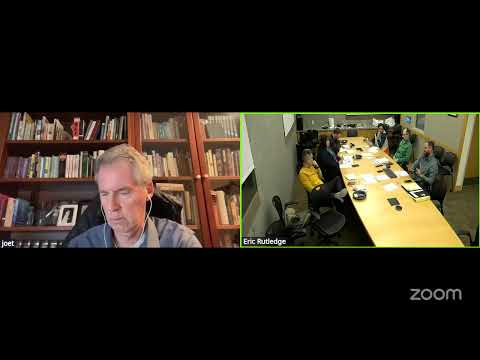
Sherwood — The Planning Commission on Nov. 25 discussed a concentrated 2026 work plan that would translate subjective design standards into clear, objective code, tighten tree-code implementation and prepare the city to comply with several recent state housing laws.
Eric, a planning staff member, told commissioners that “we do need to to make sure that our code related to residential developments, applications is clear and objective when it comes to multifamily structures … and finally, when it comes to the tree code.” The staff presentation framed the effort as a narrowly scoped “translation” of ambiguous terms into measurable requirements rather than a broad rewrite of urban form.
Why it matters: Several state laws and pending rulemaking have altered what local jurisdictions may require for housing projects. Staff warned the commission that some statutes (discussed in the meeting as SB 974 and other 2024–25 measures) could eliminate or limit the application of local design standards in certain large developments. The commission must weigh how much to codify now and how to craft any code language to allow later removal if the state law changes.
Staff said the city has already been active defending its Sherwood West plan in appeals. “We have won each of the appeals that have that have challenged Sherwood West and the metro decision,” Eric said, and staff expects a final order from the Land Conservation and Development Commission soon, with a likely appeal to the Court of Appeals.
Tree code and consultant question: Commissioners and staff debated how prescriptive a rewritten tree code should be. Commissioner Barnes urged clearer pre- and post-construction compliance and performance criteria — including DBH-based replacement ratios and survivability expectations — and recommended involving a certified arborist. “The replacement plan shall include x, y and z at a minimum,” Barnes said, arguing for codified implementation steps rather than a generic replacement plan.
Housing needs analysis and funding: Staff reported the city has until 2027 to comply with the state’s new housing needs framework and said Sherwood has been awarded a $100,000 state grant to hire a consultant and support a multiyear housing capacity analysis. That work, staff said, is expected to kick off in 2026.
Public-notice and PUD concerns: The staff also proposed shortening appeal-notice requirements by removing a second newspaper notice for appeals while maintaining direct mail to hearing participants and targeted 1,000-foot mailings. Commissioners pressed staff on the proposal and asked about legal codification, and staff said the city would update its code and take the change to City Council as a legislative amendment.
Several commissioners flagged a related change that would make certain Planned Unit Development (PUD) initial decisions administrative (staff Type II) rather than legislative, reducing early public hearings and discretionary review. Commissioners argued that large or complex PUDs have historically required multiple hearings and community benefit negotiations and urged either limiting administrative PUDs by size or keeping significant PUD decisions legislative.
Next steps: Staff will refine the proposed clear-and-objective code audit, develop options for council presentation and seek direction and budget approval from City Council (the commission’s chair is slated to present commission priorities during council goal-setting). A work session is tentatively scheduled for Dec. 9 to continue the discussion.
The commission did not take formal votes during the meeting. Staff said additional outreach and a mix of limited public engagement (work session, open house) and technical consultant work are likely next steps.