Get Full Government Meeting Transcripts, Videos, & Alerts Forever!
Get email alerts on the Utilities Rates topic
No spam. Unsubscribe anytime.
Junction City reviews water and sewer upgrade scenarios that could sharply raise utility bills
Summary
Councilors reviewed an SDS Engineers analysis showing three financing scenarios for water and sewer capital work that could require one‑time rate increases ranging roughly from 50% (with low‑cost loans) to as much as 190% in the sewer worst‑case; staff recommended a phased approach for water and will pursue state funding.
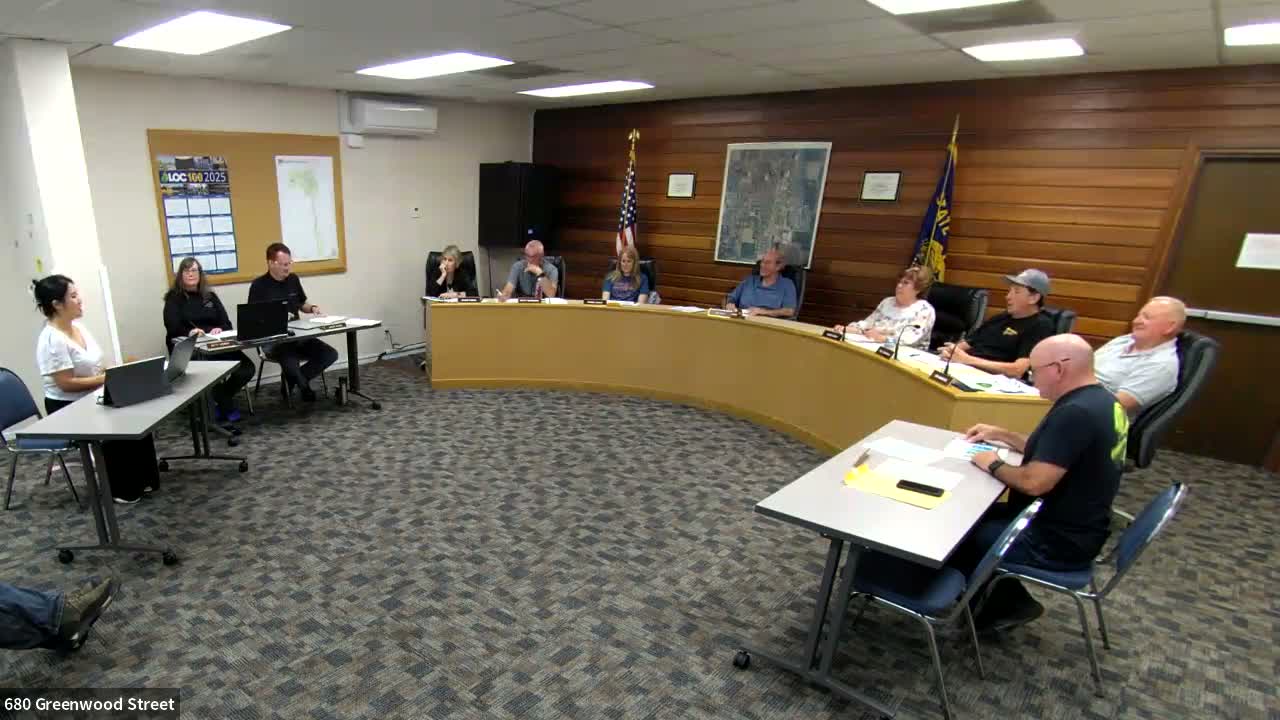
Junction City councilors on Sept. 23 reviewed an engineering analysis that lays out three financing approaches for roughly $18 million in prioritized water projects and a separate, multiyear sewer treatment program that carries several million dollars in annual debt service. Staff and the consultant said choices about phasing and state funding would determine how much household bills rise.
A consultant from SDS Engineers, who identified herself in the presentation, described the study’s method: a 10‑year cash‑flow projection, a target reserve equal to about three months of operation and maintenance (25% of O&M), modest customer growth assumptions (about 0.5% per year) and cost escalation factors for salaries and capital. The analysis identified about 14 water projects, with initial annual debt service near $1,800,000, and multiple sewer projects that together could drive roughly $4,800,000 in annual debt service tied mainly to a new treatment plant.
The consultant presented three financing scenarios for water. One model that assumes full execution in 2026 and 20‑year financing showed a one‑time increase (presented as an illustrative example) near 95% followed by modest inflationary adjustments. A phased execution spreading projects out reduced the one‑time increase to the consultant’s example of about 65%, with a roughly 3.5% annual escalation thereafter. Substituting a low‑cost state loan program (identified in the presentation as the Safe Drinking Water Revolving Loan Fund or SDWRLF) reduced the projected one‑time increase in the model to roughly 50% with similar annual escalation, and the consultant said that scenario met reserve targets across the 10‑year forecast.
On rates, the consultant translated percentage changes into dollars to aid council understanding: the study’s slides showed a current base water rate near $12 and presented a base‑rate example of about $19.22 under one scenario (an increase of roughly $6 from the current base). The consultant and staff cautioned that average monthly bills depend on customer consumption and that the presentation used example consumption levels to illustrate impacts.
Sewer funding drove the most extreme projections. The consultant described a full‑execution, long‑term debt baseline for sewer that, without additional outside assistance, could produce substantially larger one‑time increases (the presentation included a high‑end example near 190% for one modeled scenario). Staff repeatedly called those projections a conservative “worst‑case” and said they expect to reduce the required rate shock by pursuing state and regional funding programs.
Councilors and staff focused their initial prioritization on projects that would most directly affect water quality and taste: the consultant and staff singled out well‑site work (Raintree and Bailey well connections), replacement of asbestos/cast‑iron and galvanized pipes, and targeted main upgrades. Staff said those projects could be advanced in the early phase if the council chooses a phased approach.
Council discussion centered on balancing affordability and system health. Several councilors urged a phased approach and better outreach to vulnerable populations; staff said they would revisit rate structure options — including tiered rates and an assistance program — to reduce impacts on seniors and fixed‑income households. Staff also said the study shows the city may qualify for state assistance if it can present a clear project list and preliminary rate impacts.
On next steps, staff said they intend to submit a final application tied to the state programs discussed in the presentation (the consultant and staff referenced a $3,000,000 low‑interest loan and a $3,000,000 grant in materials) and to schedule a multi‑agency one‑stop meeting with regional funding partners to identify additional support. Staff said they had sufficient direction from council to proceed with that outreach and will return with refined rate impacts, possible rate structure changes and recommendations for timing once they have state feedback.
The council did not vote on rates or on financing at the session; staff emphasized the presentation was intended to narrow priorities and inform a later rate decision, expected no earlier than early next year after additional funding analysis and community outreach.