Get Full Government Meeting Transcripts, Videos, & Alerts Forever!
Get email alerts on the Water Financing topic
No spam. Unsubscribe anytime.
Financial adviser outlines ~$7.3M net financing need for Junction City water projects
Summary
Duncan Brown of PFM Financial presented options for financing roughly $14.2M in water projects, noting about $7M in other funding sources and approximately $7.3M expected in third‑party financing; options discussed included revenue bonds vs. full faith-and-credit borrowing and bank loan vs. public bond market tradeoffs.
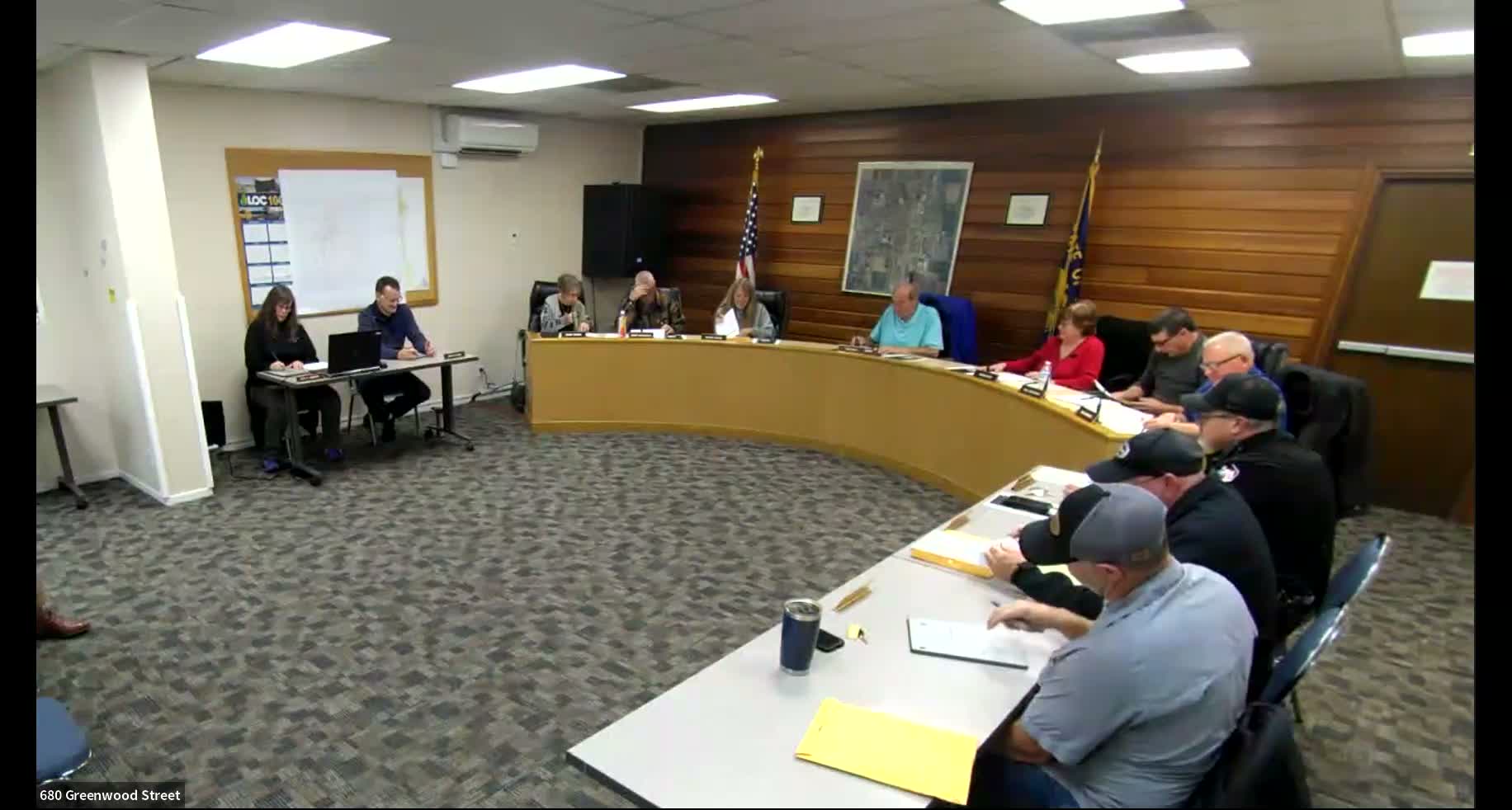
Duncan Brown of PFM Financial Advisors briefed the Junction City Council on financing choices for an identified list of water projects, summarizing options, tradeoffs and a preliminary funding gap.
Brown presented a bottom‑line estimate: total project costs of about $14,200,000 with roughly $7,000,000 in grants and other funding sources, leaving approximately $7,300,000 in net third‑party financing needs. He described the main decision points: what security to pledge to bondholders (water‑revenue pledge only versus full faith and credit), whether interim financing is appropriate, the term and amortization structure, and whether to pursue a commercial bank loan or a public bond sale.
On security, PFM explained that water‑revenue bonds rely only on water‑system revenues (often more complex and sometimes more expensive), whereas a full faith and credit pledge brings general‑fund backing as a credit enhancement and can simplify documentation and reduce cost. On term, Brown said municipal borrowing typically ranges 10–30 years and that publicly offered bonds support the longest terms (25–30 years), while many bank loans top out near 15–20 years. He noted banks can be more flexible on prepayment and often have lower upfront costs but sometimes higher rates.
Councilors asked practical questions about refinancing options, whether interim construction loans would be useful, and which projects the numbers covered. Brown said interim financing (a bridge or draw‑down feature) can be helpful if project costs are uncertain or multi‑year, but otherwise it usually adds cost and risk; refinances and balloon features are possible but carry market‑access risk at maturity.
Next steps: the presentation was educational; council did not take financing action. Staff and PFM will refine project lists, confirm grant commitments, and return with more detailed proposals when third‑party borrowing is imminent.