Get Full Government Meeting Transcripts, Videos, & Alerts Forever!
Get email alerts on the Public Safety Technology topic
No spam. Unsubscribe anytime.
Junction City council hears license-plate-reader pitch, pauses to compare alternatives
Summary
Councilors heard a presentation from Flock Safety on pole-mounted license-plate readers and debated procurement options, data retention and privacy. Staff reported an Axon bid was added; the council decided to take no immediate action and asked staff to bring an Axon demonstration at the next meeting.
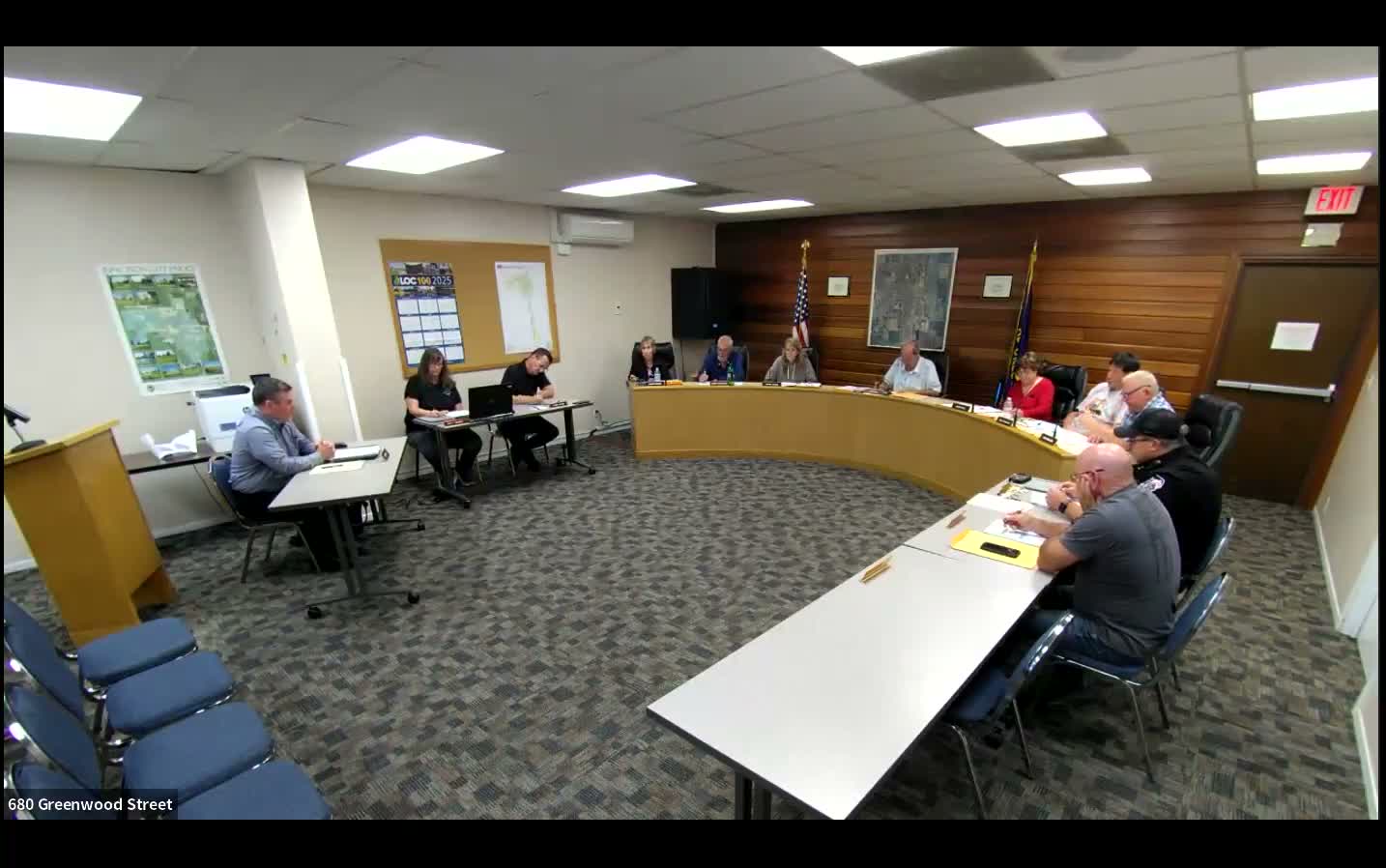
Junction City councilors on Sept. 9 heard a presentation on license-plate-reader (LPR) technology from Flock Safety and agreed to delay any immediate contract approval while the city evaluates alternatives.
Lily, a Flock representative, told the council the company’s pole-mounted cameras capture rear-vehicle images and integrate with national databases, allowing searches for specific license plates within seconds. “There is no facial recognition captured in this at all,” she said, and the company’s default setting is to delete images after 30 days unless the jurisdiction chooses a different retention window. Lily said the city “owns all of the photos of the license plates” and that Flock would not sell images.
Chief Wenner said the department already uses LPRs in patrol cars and had asked the council to consider a pole-mounted option as an investigative tool. He and staff noted differences between vendors: Flock already has a camera in town that could be used in coordination with a municipal deployment, while Axon (a different vendor) has a product that can use existing street-light infrastructure and integrate with Axon body-worn camera systems. Staff also told the council they had applied for roughly $80,000 in grant funding to offset costs.
Councilors asked technical and policy questions about turnaround time for searches and how retention choices affect cost. Lily said targeted searches return “within seconds” and that retention windows are configurable; she offered to follow up with specific cost estimates associated with longer retention.
On procurement, staff said the Flock proposal had been presented as a sole-source option but that a late bid from Axon had been added to the meeting packet as a competitive alternative. Staff described a contract structure that would include a 60-day opt-out period; city counsel clarified that authorizing the chief to sign a finalized contract could be structured so the council had effectively approved a future 60-day trial but would not be committing funds yet.
After extended discussion of operational trade-offs, data sharing and grant timing, the council agreed to hold off on immediate authorization. The council asked staff to invite Axon to present at a future meeting so members could compare both products before deciding; staff described the near-term procedural outcome as taking no action on contract approval at the Sept. 9 meeting.
Next steps: staff will schedule an Axon demonstration and return with updated cost and retention options, and the council retains the option to authorize a finalized contract or a trial period at a later meeting.