Get Full Government Meeting Transcripts, Videos, & Alerts Forever!
Get email alerts on the Land Use Zoning topic
No spam. Unsubscribe anytime.
West Linn staff move code‑cleanup amendments to Oct. 14 public hearing after planning commission recommendation
Summary
City staff presented proposed Community Development Code changes (Ordinance 1763) to clarify how minimum and maximum densities are calculated, tighten partition exemptions and require rectilinear lot shapes; council signaled no objection to sending the package to a public hearing Oct. 14, 2025.
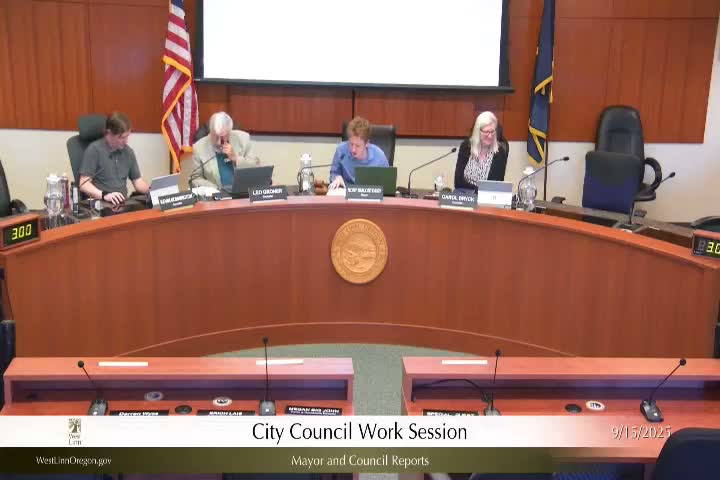
City staff presented a package of Community Development Code changes on Sept. 15 aimed at clarifying how the city calculates minimum and maximum residential densities and at tightening several subdivision standards.
The Planning Commission recommended the cleanup project and the staff presentation summarized proposed amendments bundled in Ordinance 1763, which would revise code chapters 2, 5, 24, 55, 85 and 95 and add a new measurement section in Chapter 5. Principal planner Darren Wise said the changes will replace the terms “acres gross/net” with “developable gross area” and “developable net area,” and place the density calculation language in a single, objective location so applicants and staff interpret the code the same way.
City staff said the amendments respond to Metro’s urban growth management functional plan requirement that zones include a minimum density equal to 70% of the maximum. "The city of West Linn has a minimum density of 70% of the maximum density," the presenter said, illustrating the change with an example: a 5‑acre R‑7 parcel with a maximum of 24 lots would have a 70% minimum of 17 lots under the proposed calculation.
Staff also proposed clarifications to a partition exemption that had been interpreted differently by applicants: if the net‑developable calculation for a proposed division results in three parcels or fewer, the code would allow the lower exemption (two parcels) rather than permitting larger developers to claim a broad exemption. The presenter told council that recent permit inquiries had produced inconsistent readings and that the amendment is intended to align practice with staff interpretation.
A third element would standardize the shape of newly created lots. The draft adds a rectilinear definition, allows limited segmented lot‑line changes (a 10% lateral allowance), and creates exceptions where geometry or natural features make strict rectilinear shapes impracticable. Staff said the change is intended to prevent irregular “finger” parcels that are not developable within standard setback rules and to facilitate future street extensions.
Councilors who spoke praised the attempt to make the code "clear and objective" and to reduce legal risk from ambiguous language. After discussion, the council indicated no objections and staff said it will return the ordinance to a formal adoption hearing on Oct. 14, 2025. That return to a noticed business meeting is the next procedural step; no final ordinance adoption occurred at the Sept. 15 work session.
The planning commission held two work sessions and a public hearing earlier in the summer and recommended that council adopt the package as presented. Staff noted the city attorney reviewed added language concerning measurement of heritage or significant tree areas and suggested bringing the measure back with the needed references and chapter renumbering.