Get Full Government Meeting Transcripts, Videos, & Alerts Forever!
Get email alerts on the Building Code topic
No spam. Unsubscribe anytime.
Sherwood holds first hearing on ordinance to automatically adopt current Oregon building code
Summary
At its January 2026 meeting Sherwood opened a public hearing on an ordinance to automatically adopt the state's current Oregon building code; staff said the change updates references by adoption rather than year, highlights local options for items the state removes, and notes new prewiring requirements for solar in new homes.
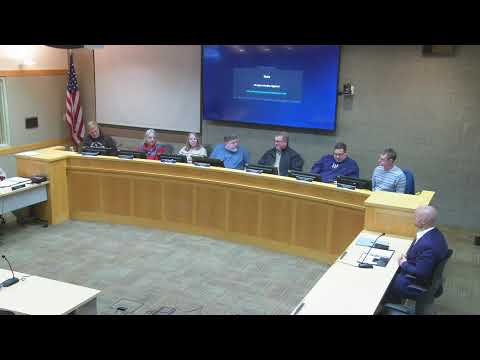
Sherwood, Ore. — At its January 2026 regular meeting the Sherwood City Council held the first public hearing on Ordinance 2026-001, a proposal to amend Chapter 15.04 of the Sherwood Municipal Code to adopt the current Oregon building code automatically rather than listing a specific code year.
Jared Bradbury, the city’s building official, told the council the change would allow the city to "automatically adopt" whatever version the state enacts so the municipal code does not reference a single year. He said the revision also preserves the city’s ability to locally adopt specific items that the state removes from its code, such as provisions addressing retaining walls or fences.
The measure matters, Bradbury said, because the building code establishes minimum safety standards — for example hurricane ties, stud sizes and engineered beams — not local design or land‑use standards. Bradbury also flagged a recent state requirement that new construction be prewired for solar and EV charging capacity, a measure he described as intended to reduce retrofit costs later. A council member cited approximate retrofit costs of about $1,000 versus roughly $25 if the wiring is installed at time of construction.
Sylvia read the hearing procedures for the council and public: staff presentation, written testimony, a four‑minute limit per person for oral testimony, and a customary two‑hearing process. The council noted the item is scheduled for a second hearing Feb. 3 but, in accordance with the city charter, the council could act at the close of the first hearing only by unanimous vote.
Mayor opened the hearing, noted no members of the public had signed up to speak and closed the hearing without public testimony. No final action was taken; the council will consider the ordinance at the Feb. 3 meeting for a possible second reading and decision.
The staff report and council discussion centered on verification of which state code year is in effect (Bradbury said the council or public could consult the referenced ORS sections) and whether automatic adoption could insert provisions the city would not want (Bradbury described most updates as benign corrections but reiterated the city must follow the state code for items not expressly left to local adoption).