Get Full Government Meeting Transcripts, Videos, & Alerts Forever!
Get email alerts on the Environmental Cleanup topic
No spam. Unsubscribe anytime.
Multistate Trust reports 27,000 tons removed from former Kerr‑McGee site; outlines sampling, redevelopment priorities
Summary
The Multistate Environmental Response Trust told the Bossier City Council it has completed five cleanup phases at the former Kerr‑McGee wood‑treating site, removing about 27,000 tons of contaminated soil, identified multiple off‑site exceedances, and is pursuing further sampling and redevelopment planning with community input.
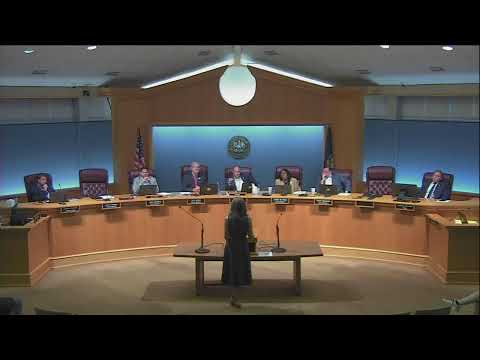
Tasha Lewis, program director for the Multistate Environmental Response Trust, told the Bossier City Council on Nov. 18 that work at the former Kerr‑McGee wood‑treating site in Bossier City has progressed through five cleanup phases and included substantial off‑site work that removed contaminated soils from nearby properties.
Lewis said the site spans roughly 32 acres divided by Hamilton Road and that contaminants of concern include creosote, benzene and polycyclic aromatic hydrocarbons (PAHs). She said the trust has removed about 27,000 tons of contaminated soil — "that's around 1,200 truckloads of contaminated soil were shipped off to the landfill" — and that off‑site cleanups between 2022 and 2024 addressed areas including the Scott Dickerson Homes and adjacent streets.
The presentation added that the team conducted sampling at approximately 102 locations along Green Street, Carver Street and near Jean Street and found 26 sample locations that exceeded Louisiana Department of Environmental Quality health‑based levels. Lewis said those community‑driven recollections of historical flooding and stormwater flow guided additional sampling that identified contamination in a previously unknown ditch north of Jean Street; crews excavated soils from that ditch and adjacent properties and replaced them with backfill, completing what Lewis described as a fifth cleanup phase.
Council members and staff pressed the trust on remaining contamination and liability. Council member Cliff Smith asked what happens if contamination is discovered during later redevelopment: "Once y'all sell that, construction starts… Where does that liability fall?" Lewis responded that the trust is collecting supplemental surface and depth samples to reduce that risk and that "in the event if we donated the property…and there was work that was completed and they found additional contamination, sale proceeds or if it's donated and we have funds in the environmental cost account, the trust in that instance would be there to help support and to facilitate any additional cleanup."
Lewis described two potentially redevelopable areas — a 6‑acre west parcel and approximately 6 acres on the main parcel near Hamilton Road — and said the trust is soliciting input from potential purchasers and the community on priorities, which residents raised in workshops as grocery and retail, a community or recreational center, vocational and health services, and community‑based solar.
She also invited attendees to a community meeting at Red River Missionary Baptist Church from 6:00 to 7:30 p.m. that evening for additional information and public input.
The trust cited the Louisiana Department of Environmental Quality’s RECAP program (risk evaluation corrective action program) as the regulatory framework for the cleanup. Lewis said further on‑site sampling results are expected in the spring and that the trust will continue discussions with potential future owners while seeking fair market value where appropriate but noting donation is possible when it benefits the community.
Next steps include completing the additional sampling work plan, reviewing results with regulators, and continued community engagement and redevelopment planning. The council did not take formal action on disposition at the meeting; Lewis said discussions with local governments and potential purchasers are ongoing.