Get Full Government Meeting Transcripts, Videos, & Alerts Forever!
Get email alerts on the Ld 555 Department Child And Family Services topic
No spam. Unsubscribe anytime.
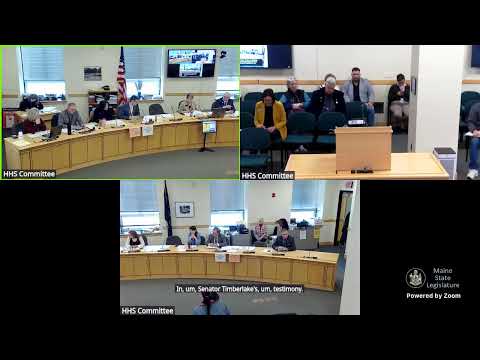
Lawmakers hear hours of testimony on LD 555 to create separate Department of Child and Family Services
Summary
A public hearing on LD 555 drew dozens of Maine residents, advocates and state officials. Supporters cited repeated child-fatality and oversight failures; DHHS and some experts warned siloing services could disrupt care and risk federal funding. No committee vote was taken.
Senator Jeff Timberlake, sponsor of LD 555, told the Joint Standing Committee on Health and Human Services that the state’s child-welfare system has produced “repeated, systemic, and well documented” failures and urged lawmakers to create a cabinet-level Department of Child and Family Services to elevate accountability and leadership. Timberlake listed children who died after contact with the Office of Child and Family Services (OCFS) and cited fatality counts he said were 34 in 2021, 32 in 2022 and 31 last year. He estimated initial implementation costs at roughly $4,000,000 and presented a road map for restructuring.
Supporters at the hearing included surviving family members and foster parents who described personal cases they said show a pattern of inadequate investigations, poor oversight and failures to follow procedure. Joseph Baldacci, a cosponsor, cited a November 2024 federal inspector general review and urged bipartisan action. Several speakers referenced an ombudsman review Timberlake described ("76 cases they reviewed, 36 of them they found serious problems with") and a statistic referenced in testimony that 94% of reviewed investigations did not meet procedural requirements.
State Department of Health and Human Services (DHHS) officials, represented at the hearing by Abby Stivers, director of government relations, submitted and read a departmental letter opposing LD 555. Stivers said the bill would transfer child- and family-related functions now spread across DHHS into a new department, create new silos, and “undermine” ongoing cross-system collaboration with MaineCare, the Maine CDC and other offices. She warned that moving certain maternal and child-health work out of the state health agency could “directly contradict” the federal statutory requirement cited in testimony and risk the loss of federal funding.
Policy experts and provider groups urged caution. Adam Bloom Pikopoulos of the Alliance for Addiction and Mental Health Services told the committee that coordinated leadership across child welfare and children's behavioral health is critical and that reorganization could disrupt services and implementation of recent federal settlement requirements related to children’s behavioral health. Melissa Hackett of the Maine Children's Alliance said she supports studying optimal service structure but expressed doubts that the draft bill, as written, is the right vehicle now and recommended process-driven alternatives such as a commission or task force.
Committee members and witnesses asked for comparative evidence from states Timberlake named as having separated child-welfare functions, and requested the Blue Ribbon Commission report and more granular child-fatality data. The chair noted the hearing was for public testimony and that the committee will deliberate at a scheduled work session in the coming weeks; no vote was taken at the hearing.
Claims and serious allegations raised in testimony included assertions that OCFS and related systems routinely failed to follow required procedures, that some foster placements posed safety risks, and that workers and system actors in particular cases engaged in misconduct. Those claims were presented by witnesses as personal experiences or as summaries of reviews; DHHS and other witnesses urged careful review of evidence and warned of unintended consequences of structural change. The committee accepted written materials from several speakers and closed the hearing with a request for additional reports and comparative analyses before the work session.
The committee did not take a formal vote. The next procedural step is the scheduling of a work session to review evidence and proposed amendments before any formal committee recommendation.