Get Full Government Meeting Transcripts, Videos, & Alerts Forever!
Get email alerts on the Hf103 topic
No spam. Unsubscribe anytime.
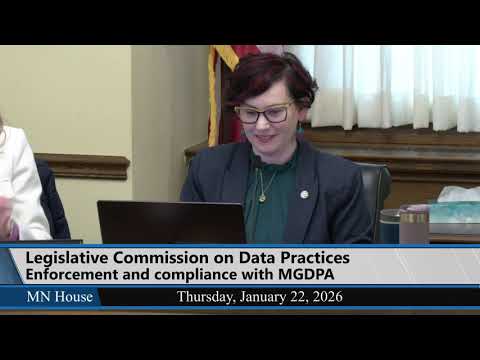
Commission hears proponents of HF103 urging ban on reverse geo/keyword warrants
Summary
Proponents, including ACLU lawyers and privacy advocates, urged the commission to back House File 103, arguing reverse location (geofence) and reverse keyword warrants sweep in large numbers of uninvolved people and present grave Fourth Amendment and privacy concerns.
Representative Tara Feist presented House File 103, which would prohibit most reverse warrants—commonly called geofence or reverse‑keyword warrants—that compel third parties to identify everyone in a geographic area or everyone who searched a given term.
Chad Marlow of the ACLU explained two types of reverse warrants and said they are “a 21st‑century version of a general warrant.” He cited Google figures showing a sharp increase in reverse warrants sent to the company and described Minnesota examples, including an instance where a reverse keyword warrant sought IP addresses for anyone who searched terms connected to a local hit‑and‑run.
Marlow said the use of reverse warrants can turn members of the public who merely sought information into criminal suspects and risks disproportionate harms for vulnerable populations. “Reverse warrants are very good at harming innocent people and very bad at solving crimes,” he said.
Other witnesses, including Manera Mohammed (ACLU Minnesota) and Mark Stignani (engineer/attorney), supported the bill and urged tightening definitions and closing loopholes to cover alternative surveillance tools (license‑plate readers, Bluetooth beacons, commercial data brokers) and to require early deletion of non‑subjects’ data.
Members raised issues about exceptions (for example, for missing persons or exigent circumstances), separation‑of‑powers concerns about telling courts what they 'shall issue', and how the bill’s exigency language would interact with Chapter 13 definitions. Chad Marlow noted the bill would not prevent targeted warrants for identified persons; reverse warrants seek everyone's data in an area or for a keyword.
No committee vote was recorded; members asked staff to review technical language and consider exceptions and clarifications before the short session.