Get Full Government Meeting Transcripts, Videos, & Alerts Forever!
Get email alerts on the Criminal Record Sealing topic
No spam. Unsubscribe anytime.
Maine committee hears support and concern over bills to seal criminal records
Summary
A legislative committee heard hours of testimony for four bills that would expand or automate sealing of criminal history records, especially for marijuana-related misdemeanors. Supporters framed the bills as relief for people harmed by collateral consequences; law enforcement and regulators raised implementation, safety and licensing concerns.
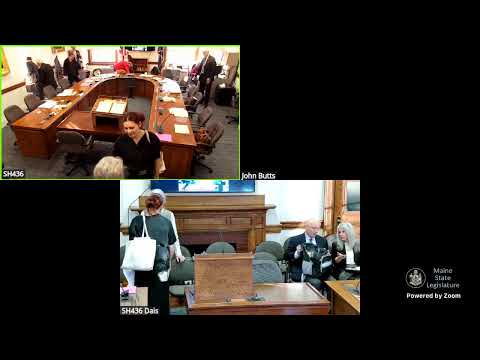
The Joint Standing Committee on Criminal Justice and Public Safety opened public hearings on four measures (LD 1916, 1917, 1918 and 1919) that would expand when criminal history records in Maine can be sealed.
Supporters, including the Maine Prisoner Advocacy Coalition and the ACLU of Maine, said sealing long-standing misdemeanor records addresses barriers to housing, employment and civic participation. "Any criminal conviction is a life sentence," testified Peter Layman of the Maine Prisoner Advocacy Coalition, adding that easy access to records has created lasting collateral consequences. Alicia Melnick of the ACLU told the committee that "these 4 bills aim to implement the committee's consensus recommendations" from the Criminal Records Review Committee.
Opponents and agency witnesses urged caution. Ken Mason, chairman of the Maine Sheriffs Association, said sealing could impede law enforcement investigations and public safety work, warning that "by sealing these records, lots of little things add up." The judicial branch said broad automatic sealing would create a large administrative burden: Julie Finn of the Judicial Branch testified that "extensive sealing of records cannot be done without significant additional resources" and noted that the courts now process petition-based sealing under Title 15, chapter 310-A. Amy McCollum of the State Bureau of Identification explained access rules, saying that sealed information does not appear on public rap sheets but remains visible to law enforcement and some licensing checks: "Public criminal history would not see the sealed information. Law enforcement ... they would see the sealed information."
Regulators also flagged risks for licensing and consumer protection. Joan Cohen, commissioner of the Department of Professional and Financial Regulation, warned that some licensing compacts and boards rely on criminal-history reviews and said the bills could create confusion about what agencies may access sealed records.
Committee members asked analysts and witnesses to provide clearer flowcharts and a fiscal estimate for work sessions, including definitive answers on deferred dispositions, who can view sealed records, and how automatic processes would run in practice. The committee did not take votes; lawmakers scheduled follow-up work sessions to review requested analyses and possible amendments.