Get Full Government Meeting Transcripts, Videos, & Alerts Forever!
Get email alerts on the Data Practices Enforcement topic
No spam. Unsubscribe anytime.
Residents tell commission enforcement failures leave public without usable records
Summary
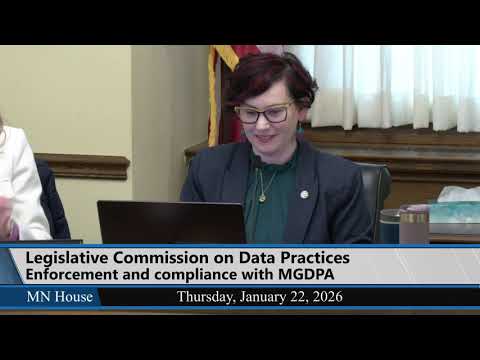
Residents impacted by the East Side Corridor project told the Legislative Commission on Data Practices that protracted delays, inaccessible file formats and narrow enforcement options undermine public participation and accountability under the Minnesota Government Data Practices Act.
Matt Sennen, speaking for East Side Corridor residents in Steele County, told the commission he and others have filed roughly two dozen data requests across multiple agencies since October 2024 and ran into inconsistent responsiveness and lengthy delays.
“We substantially prevailed in our data practices complaint,” Sennen said, “but that ruling did not result in meaningful access to the data.” He said the county’s failure to produce data in usable formats and to extend public comment windows left residents unable to submit meaningful, timely public comments.
Melissa Zimmerman, who testified alongside Sennen, described how inspection access ‘deteriorated’ when the county provided files in formats the public could not use and removed software needed to review data. “The county stated more data was available, but we quickly learned that the software needed to review that data was removed,” Zimmerman said.
Witnesses told the commission that prevailing in an administrative or judicial hearing did not guarantee practical remedies: enforcing rulings often requires additional litigation, which most residents cannot afford. Zimmerman said pursuing district‑court enforcement could cost about $10,000, a barrier to most community groups.
Members expressed concern about enforcement gaps and data retention. Representative Scott thanked the witnesses and said, “the average taxpayer like yourselves cannot afford to litigate this,” and urged staff follow‑up. Senators and commission members discussed possible low‑cost dispute resolution options and recommended staff compile testimony to identify quickly achievable fixes for the coming short legislative session.
The commission did not take formal action on the testimony; members asked staff to collect examples and consider possible legislative or administrative remedies to speed production, improve formats, and create realistic timelines for public review.