Get Full Government Meeting Transcripts, Videos, & Alerts Forever!
Get email alerts on the Clean Slate topic
No spam. Unsubscribe anytime.
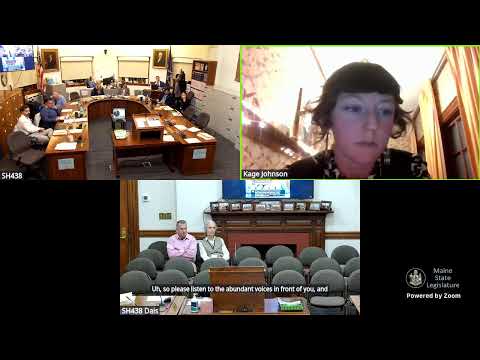
Maine committee hears broad support, some opposition for automatic 'clean slate' sealing bill
Summary
Sen. Rachel Talbot Ross presented LD 19 11 to automate sealing of many low‑level criminal records; supporters said it would remove lifetime barriers to employment and housing, while press and some regulators warned about public‑records access and licensing checks. The committee scheduled a work session for follow-up.
Senator Rachel Talbot Ross told the Joint Standing Committee on Judiciary that LD 19 11 would create an automated process to seal certain criminal history records for people who remain conviction‑free for a set period, building on recommendations from the Criminal Records Review Committee.
The bill would expand eligibility to most class D and E misdemeanors and some low‑level drug felonies, set waiting periods tied to offense class and sentencing (for example, some misdemeanors would be sealed after five years; nonconvictions would be sealed six months after disposition), and explicitly exclude family‑related offenses under Title 17‑A, chapter 23 and cases that carry orders of restitution. Talbot Ross said the amendment preserves courts’ and law enforcement’s access to records while restricting background‑check companies and the general public: "Individuals who have paid their debt to society should not continue to be penalized," she said.
The sponsor described implementation details that shaped the amendment: the judicial branch is updating case‑management software and automatic sealing under this bill would begin in 2028, phased to account for older paper files and staged rollouts. She said stakeholders, including the Clean Slate Initiative, Code for America, district attorneys’ offices, recovery organizations and victim advocates, gave input that produced the current draft.
Supporters who spoke at the public hearing — including formerly incarcerated people, recovery advocates and business‑community representatives — emphasized the practical barriers that old records create. "I've had a monkey on my back for something that happened 30 years ago," said Steven Shoff, who described being repeatedly turned away from housing and jobs. Several witnesses cited national studies and state examples showing increases in employment and wages after sealing, and supporters estimated the bill could make relief available to many thousands of Mainers.
Cumberland County District Attorney Jackie Sartorius said prosecutors need continued access to criminal history for charging and sentencing decisions, but she also voiced conditional support for the bill’s public‑safety protections: "I need to protect the public," she said, noting that prosecutors would still be able to view full criminal histories under the proposal.
Opponents raised constitutional and practical concerns. Judy Meyer of the Maine Press Association argued that automatic sealing on a large scale raises First Amendment and public‑records issues and that felonies added in the amendment had not been fully vetted in committee work. The Department of Professional and Financial Regulation warned that automatic sealing could complicate licensing and multistate reciprocity checks in regulated professions.
Lawmakers pressed sponsors on implementation details — whether restitution orders should permanently disqualify a case (the sponsor said yes, any restitution order would make a conviction ineligible), how out‑of‑state criminal records are considered (the bill is limited to Maine convictions), and how the judicial branch will reconcile older paper case files. The committee said it will follow up in a work session and requested additional materials, including the CRRC report and implementation cost estimates.
The hearing produced a cross‑section of personal testimony and technical questions: supporters stressed the social and economic costs of long‑term record exposure, the press raised public‑access and transparency concerns, and regulators flagged licensing and reciprocity implications. Committee members scheduled a work session to resolve open implementation, data, and constitutional questions before moving forward.