Get Full Government Meeting Transcripts, Videos, & Alerts Forever!
Get email alerts on the Environment topic
No spam. Unsubscribe anytime.
ACF committee directs interagency invasive species review after broad stakeholder testimony
Summary
The committee voted 'ought to pass as amended' on LD 1661, converting it to a resolve directing IF&W (in collaboration with other agencies) to compile and report on existing invasive species programs and coordination opportunities; stakeholders urged greater funding and strategic prioritization.
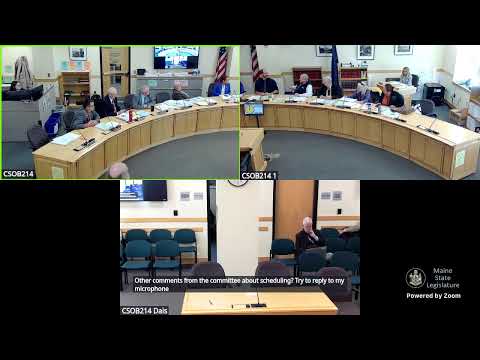
After extended testimony from agency staff and conservation stakeholders, the Agriculture, Conservation and Forestry committee on Jan. 12 adopted a committee amendment to LD 1661 that converts the bill into a resolve directing the Department of Inland Fisheries & Wildlife (IF&W), working with other relevant agencies, to review current invasive species activities, identify gaps and recommend collaborative structures and funding needs.
IF&W's Nate Webb told the committee that invasive species work is important and that the department already has staff and active programs, including two dedicated aquatic invasive positions. Webb cautioned that creating a new office or additional bureaucracy could divert resources from field management and suggested that an initial inventory and assessment of current efforts would be the best next step.
Stakeholders including Gary Fish (former state horticulturist) and Francesca 'Ches' Gundrum (Maine Audubon) argued that Maine needs higher priority and long‑term funding for invasive species management, including early detection and rapid response, surveillance, research and prioritization across terrestrial, aquatic and wildlife domains. Fish said an upper‑level advisory council with objective oversight could help set statewide priorities and align funding where currently available funds are concentrated (aquatic efforts receive more dedicated funding through boat‑sticker‑related resources). "We need something above the departments that will have a more objective outlook on how invasive species should be managed," Fish said.
After discussing the merits and staff capacity concerns, committee members agreed to a resolve directing IF&W (in collaboration with other natural resource agencies and relevant stakeholders) to gather and synthesize information on existing programs, working groups, responsibilities and funding and return a report to the committee in the next legislative session. The motion to report 'ought to pass as amended' was unanimous (10‑0, two absent).
What happens next: IF&W and partner agencies will compile an interagency review, identify opportunities for improved coordination and resource needs, and report recommendations to the committee for possible legislative action. Stakeholders expressed interest in early detection/rapid response funding and possibly an elevated coordinating body if resources can be guaranteed.