Get Full Government Meeting Transcripts, Videos, & Alerts Forever!
Get email alerts on the Surveillance Policy topic
No spam. Unsubscribe anytime.
Richland police chief says ALPR/Flock access error was 'my fault' after audit; city limits external access
Summary
Chief Marty Pilcher told council an audit found limited federal access to the city's Flock camera system earlier in 2025; he apologized, described policy and technical changes and said the city now limits access to Washington agencies and requires case numbers for searches.
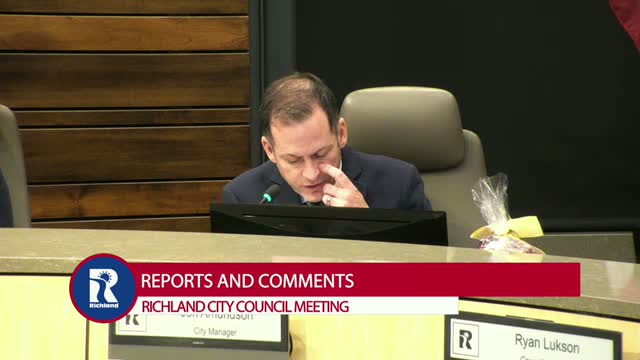
Chief Marty Pilcher told the Richland City Council on Dec. 16 that an audit of the city’s Flock automated license plate reader (ALPR) system showed limited external searches earlier in 2025 and that he accepts responsibility for failing to anticipate a configuration change.
"Any fault, connected to this issue, is mine and mine alone," Pilcher said, describing system updates earlier in the year that allowed external searches and the department’s subsequent corrective steps. He said the department has removed federal access, limited searches to Washington agencies that must comply with state law, and reinforced the requirement that requests include a case number. Pilcher also described a 30-day retention policy for ALPR images and cited several criminal investigations — including an Uptown homicide, a robbery on Holly Street, and a school shooting investigation — where the ALPR system aided identification and capture of suspects.
City Manager Amundsen and council members pressed for clarity about who may access data going forward. Council Member Meyer said the council shares responsibility for protecting the data and warned that sharing records with agencies that lack equivalent auditing controls could expose the city to liability, noting the Border Patrol searches discussed in the audit may violate Washington law. "That data ... should only be shared with agencies that have similar auditing and controls regarding its access," Meyer said.
Pilcher said the department regularly audits searches and is considering a limited reopening of access to jurisdictions with similar legal protections — he specifically mentioned Oregon as a possible candidate because of comparable state rules — but emphasized the city owns its images and controls access. The mayor asked whether the council wanted a follow-up workshop on the topic; council members indicated their questions were largely answered but staff was asked to continue monitoring access and public-record requests.
The admission came during a broader public-safety and reporting section of the agenda, after members of the public raised concerns about Ben Franklin Transit governance and other community matters. Council and staff said they will continue to track both the BFT investigation and any legal implications tied to ALPR data access.