Get Full Government Meeting Transcripts, Videos, & Alerts Forever!
Get email alerts on the Transportation Pch Masterplan topic
No spam. Unsubscribe anytime.
Caltrans outlines multi-option PCH master plan; residents split over protected bike lanes, parking and timing
Summary
Caltrans presented a Pacific Coast Highway Master Plan and feasibility study outlining roundabouts, sidewalks, protected or buffered bike lanes, angled parking and lane reductions. The plan estimates $62M–$268M depending on options; residents and council pressed Caltrans on funding, timing and impacts to parking and emergency access.
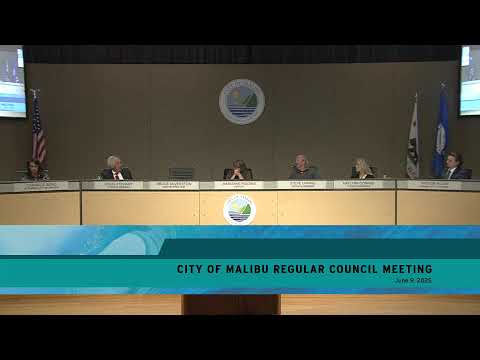
Caltrans on Monday presented a draft Pacific Coast Highway Master Plan and feasibility study to the Malibu City Council, proposing short-, medium- and long-term changes intended to reduce crashes, add pedestrian and bicycle accommodations and better integrate the highway with Malibu’s community character. The study, delivered by Ryan Schneider of Caltrans District 7, proposes a toolbox of solutions including nine roundabouts, new sidewalks, colored buffered or physically separated bike lanes, staggered and angled parking, and lane reductions in select segments.
Schneider said the plan’s primary goal is to "reduce crashes and crash severity," while also improving access for pedestrians, bicyclists and transit users. He described community outreach including nine charrettes, online surveys and stakeholder meetings and said two cross‑section options — protected two‑way bike lanes on one side or colored/buffered lanes on both sides — are included in most segments.
A key technical challenge highlighted by Caltrans is the Carbon Beach corridor, where frequent driveways and visibility limits make physically separated bike lanes difficult without substantial parking removal. Schneider said, "if the city and residents and the Coastal Commission were willing to remove parking, and we could put a protected bike lane a little bit out from the driveways and do something like put retractable bollards in the driveways, then you might have a situation where it could work." He also noted some measures could be implemented sooner via planned repaving (CAPM) projects.
Caltrans provided planning-level cost estimates ranging from roughly $62 million to $268 million, depending on the palette of improvements chosen. The agency described the study as a 30-year plan and said funding sources are potential mixes of local, state and federal grants; no funding commitments were announced.
Public comment reflected sharp division. Some speakers urged Caltrans to adopt physically protected bike lanes and modern driveway-engineering solutions modeled on European cities, arguing safety data and legal requirements (Senate Bill 960, as cited by speakers) mandate action. Others — including frequent PCH cyclists — opposed rigid plastic buffers, arguing they would be ignored by pelotons and could create new hazards. Several residents urged Caltrans and the city to factor the urgent water-main and sewer work and other post‑fire infrastructure needs into sequencing so that repaving and long‑term projects do not require repeated roadway excavation.
Council members asked Caltrans to break the plan into implementable pieces aligned with the repaving schedule and to return with more detail on which elements could be incorporated into the funded CAPM repaving projects. Rob Devoe of city public works clarified that the western repaving work is planned in 2026 and eastern repaving is scheduled later (after 2028), creating opportunities to coordinate some bike-lane striping with upcoming work.
Next steps: Caltrans staff said they will continue the iterative process with the city and the district to prioritize safety-focused projects. Council members and public speakers encouraged the city to prepare comments during the extended public comment period and to discuss funding and environmental review pathways at future meetings.