Arizona House completes first readings of dozens of bills, schedules committee meetings
Loading...
Summary
The Arizona House conducted first readings of a lengthy slate of bills across education, public safety, commerce, natural resources and appropriations before adjourning to reconvene Jan. 21; the measures were referred to committees, with no floor debate or final votes recorded.
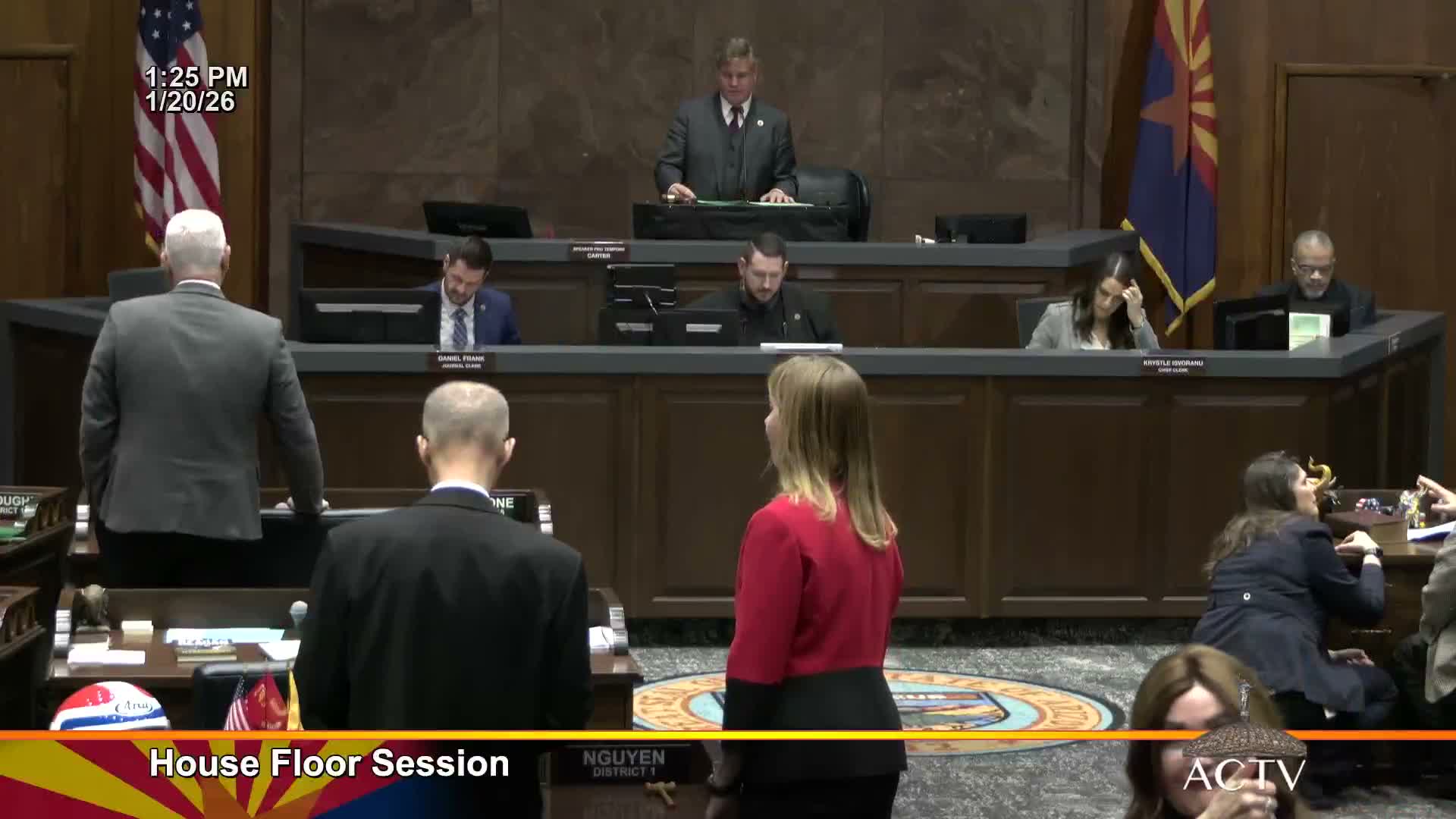
The Arizona House of Representatives convened on Jan. 20, 2026, completed first readings of dozens of House measures covering topics from education and commerce to natural resources and appropriations, and recessed to reconvene at 1:15 p.m. Wednesday, Jan. 21, 2026.
Clerks/readers performed a lengthy first reading of bills and resolutions that were then referred for printing and committee assignment. The measures touched on a broad set of policy areas — including natural resources, energy and water; commerce and taxation; education; public safety and judiciary matters; health and human services; and multiple appropriations items. No floor debate or recorded roll-call votes on the measures took place during the session; the items were sent to the committees listed on the calendar.
The session opened with routine formalities: the presiding officer called the House to order, an invocation was delivered by Paul Sorensen (introduced as president of the LDS Phoenix Temple and a guest of Representative Seth Blattman), and Representative Sarah LaBourde led the Pledge of Allegiance. The House dispensed with the reading of the Jan. 15 journal and recorded attendance at 57 present, 0 absent and 2 excused.
Members also recognized visitors. Representative Gress introduced a delegation from Republic Services and cited the company’s statewide presence and economic contributions; members acknowledged guests from local school boards and education advocates. Dr. Tammy Penhallow of Legislative District 3 was announced as the doctor of the day.
Committee chairs and members announced schedules for forthcoming committee meetings and hearing locations: several committees signaled meetings later that afternoon or the next morning (committee names and times were announced on the floor). Representative Willoughby moved to adjourn the House; a voice vote carried and the House stood adjourned until the specified reconvening time.
Because the session only recorded first readings and procedural motions, the measures will advance to committee for hearings and further action. Citizens and stakeholders interested in specific measures should consult the House calendar and committee notices for hearing dates and bill assignments.