Pomona Unified staff asks board to consider consolidating underenrolled schools; Armstrong Elementary singled out
Loading...
Summary
Superintendent Darren Knowles presented enrollment, capacity and cost data and asked the board to consider consolidating Armstrong Elementary with Golden Springs, prompting strong public opposition from Diamond Bar residents and requests for more local data and a study session.
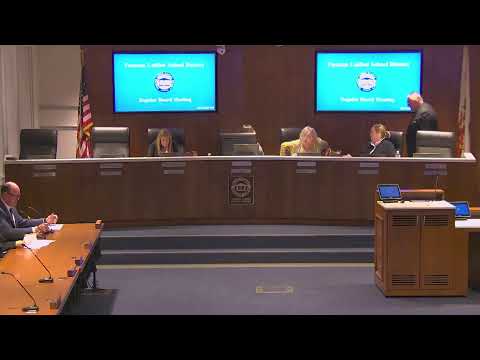
Superintendent Darren Knowles told the Pomona Unified School District board on Jan. 21 that falling enrollments, local birth‑rate trends and per‑pupil operating costs have pushed the district to prepare consolidation recommendations.
“We are asking the board … to consider the consolidation of Armstrong,” Knowles told trustees during an information-only staff report that reviewed enrollment decline, facility capacity and criteria developed by a community committee.
Knowles said the district has been tracking steep declines statewide and locally, cited birth‑rate and capacity figures and said operating a small campus can exceed $18,000 per student. He described the committee’s criteria — site capacity, facility condition, capacity utilization, proximity to adjoining districts and operating costs — and said cabinet would bring specific consolidation options, beginning with Armstrong and Golden Springs as paired options for 2025–26 or following the Golden Springs expansion.
The superintendent emphasized the presentation was for information and that no decision was requested that night, but asked trustees to review data and consider study sessions.
Community members who live near Armstrong urged the board to keep the school open. Claudia Washington said, “I want to speak in support of Neil Armstrong Elementary School continuing as a school.” Willie Mae Harris and other Diamond Bar residents told the board they had voted for bond measures and want clearer plans showing how the district would use assets and support neighborhood schools.
Parents and community speakers raised practical concerns — bus access, outreach to families, whether enrollment declines reflected families leaving because of uncertainty, and whether the district had adequate census and intra‑district transfer data. Multiple speakers requested the district present up‑to‑date census and boundary maps and to include Diamond Bar representation in any working groups.
Board members pressed staff for more granular data. Trustee [name unavailable in transcript] asked for capacity figures that exclude portables and for a breakdown of how many of Armstrong’s 213 students are transfers from outside the attendance area; Mr. Knowles said the district would provide scattergrams and transfer‑origin data and recommended a study session split into elementary, middle and high school modules.
The superintendent outlined logistics the district would need to address in any consolidation: facilities assessments, instructional realignment, special‑education program certification, transportation and boundary changes. He noted statutory steps and contractual obligations tied to collective‑bargaining agreements and said consolidation could free funds to support larger or higher‑need programs elsewhere.
No formal action was taken on consolidation at the Jan. 21 meeting. Trustees directed staff to collect the requested demographic and site‑use data and to schedule study sessions so the board and community can review options and timelines.
Next steps: the district will provide the board with transfer origin maps, updated census analyses and capacity counts that exclude portables, and staff said it would convene study sessions before any consolidation vote.