Get Full Government Meeting Transcripts, Videos, & Alerts Forever!
Committee advances appropriations for older blind services and increased rates for IDD home- and community-based services
Summary
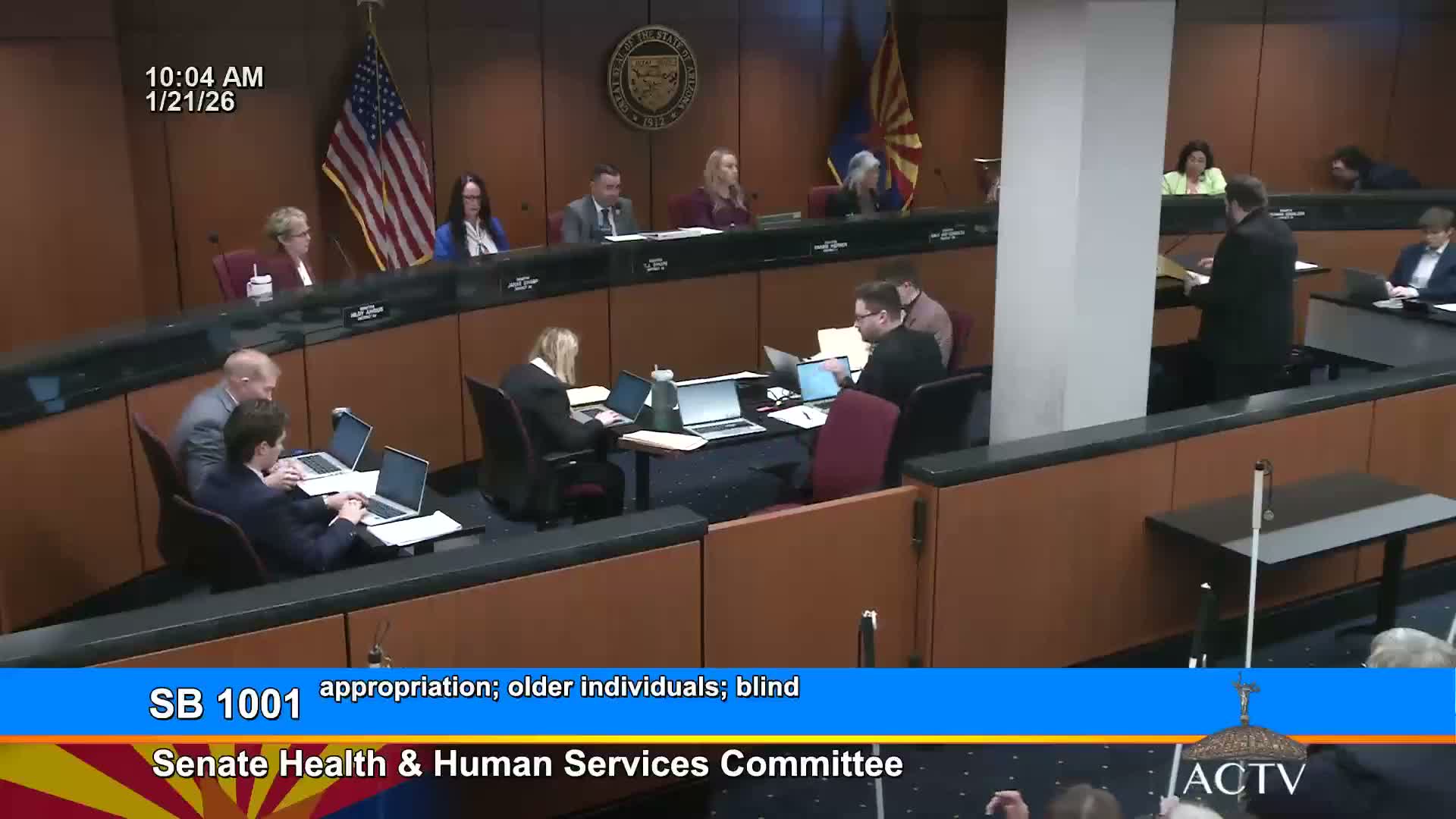
The committee gave due-pass recommendations to SB 1,001 (a $1 million appropriation for services for older individuals who are blind) and SB 10 72 (multiyear appropriations and Medicaid authority to raise reimbursement rates for in-home and room-and-board services for people with intellectual and developmental disabilities).
The Health and Human Services Committee moved two funding bills after public testimony urging more resources for long-waiting seniors with vision loss and for providers serving people with intellectual and developmental disabilities (IDD).
SB 1,001 would appropriate $1 million from the state general fund in fiscal year 2027 to the Department of Economic Security for the Older Individuals Who Are Blind program. Advocates from the National Federation of the Blind and local peer groups…
Already have an account? Log in
Subscribe to keep reading
Unlock the rest of this article — and every article on Citizen Portal.
- Unlimited articles
- AI-powered breakdowns of topics, speakers, decisions, and budgets
- Instant alerts when your location has a new meeting
- Follow topics and more locations
- 1,000 AI Insights / month, plus AI Chat