Get AI Briefings, Transcripts & Alerts on Local & National Government Meetings — Forever.
Committee advances a slate of bills on elections, courts and campaign finance
Loading...
Summary
The Senate Judiciary and Elections Committee moved a series of bills and referrals forward on a range of topics — from campaign funds for personal security and attorney‑licensing to limits on courthouse appointments — often by narrow votes. Sponsors said the measures are administrative or reform‑oriented; opponents raised concerns about access, transparency and costs.
Beyond the heavily contested items, the committee advanced a number of additional measures by voice or roll call votes. Highlights:
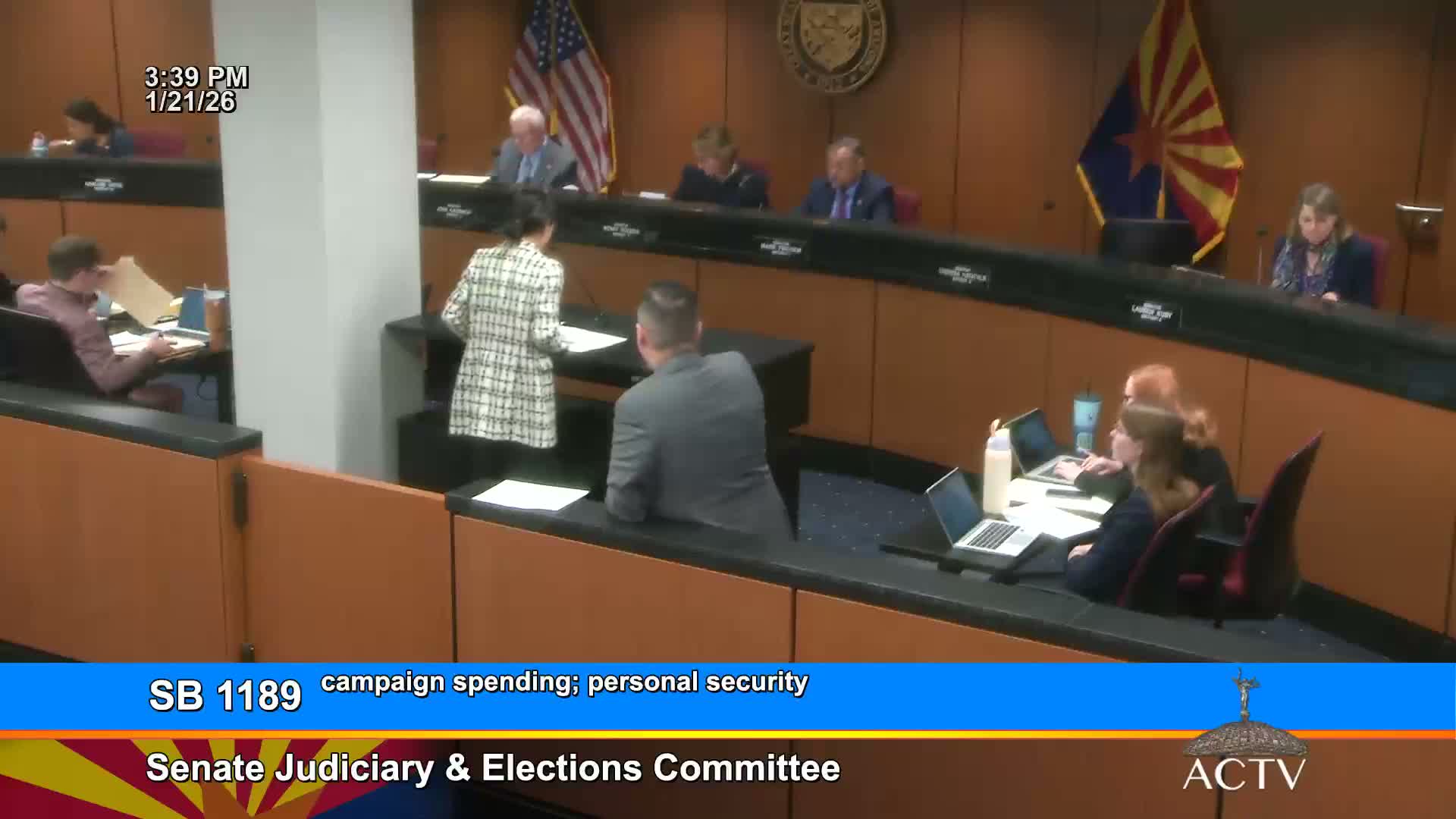
- SB1189: Allows candidate committees to spend campaign funds on personal security for candidates and their family members; passed unanimously and received a due‑pass recommendation.
- SB1081: Prohibits attorneys representing Department of Child Safety (DCS) from appearing before judges they have appeared before in the prior five DCS cases to reduce perceived familiarity; advanced with a due‑pass recommendation after debate on rural impacts.
- SB1133: Eliminates duplicate financial disclosure requirements for candidates who have already filed annual financial reports; committee adopted an amendment adding an emergency clause and passed it unanimously.
- SB1168: Requires recordkeepers to publish counts of physically printed ballots and other categories on county websites to aid audits; the measure was advanced amid requests for technical clarifications from election experts.
- SB1148 and related measures: A mix of family‑court appointment reforms, rules around court‑ordered professional personnel, and reforms to how attorney licensing interacts with the Supreme Court were discussed and in several cases given due‑pass recommendations (usually by 4–3 margins). SCR1002 (donor reporting threshold change) and SCR1005 (bar foreign contributions to ballot measures) were also advanced as voter referrals.
Many sponsors said the bills address administrative gaps, security or court accountability; opponents flagged potential unintended consequences, costs or equity implications. Several bills advanced with narrow majorities and are likely to face floor amendments and additional committee review.