Get AI Briefings, Transcripts & Alerts on Local & National Government Meetings — Forever.
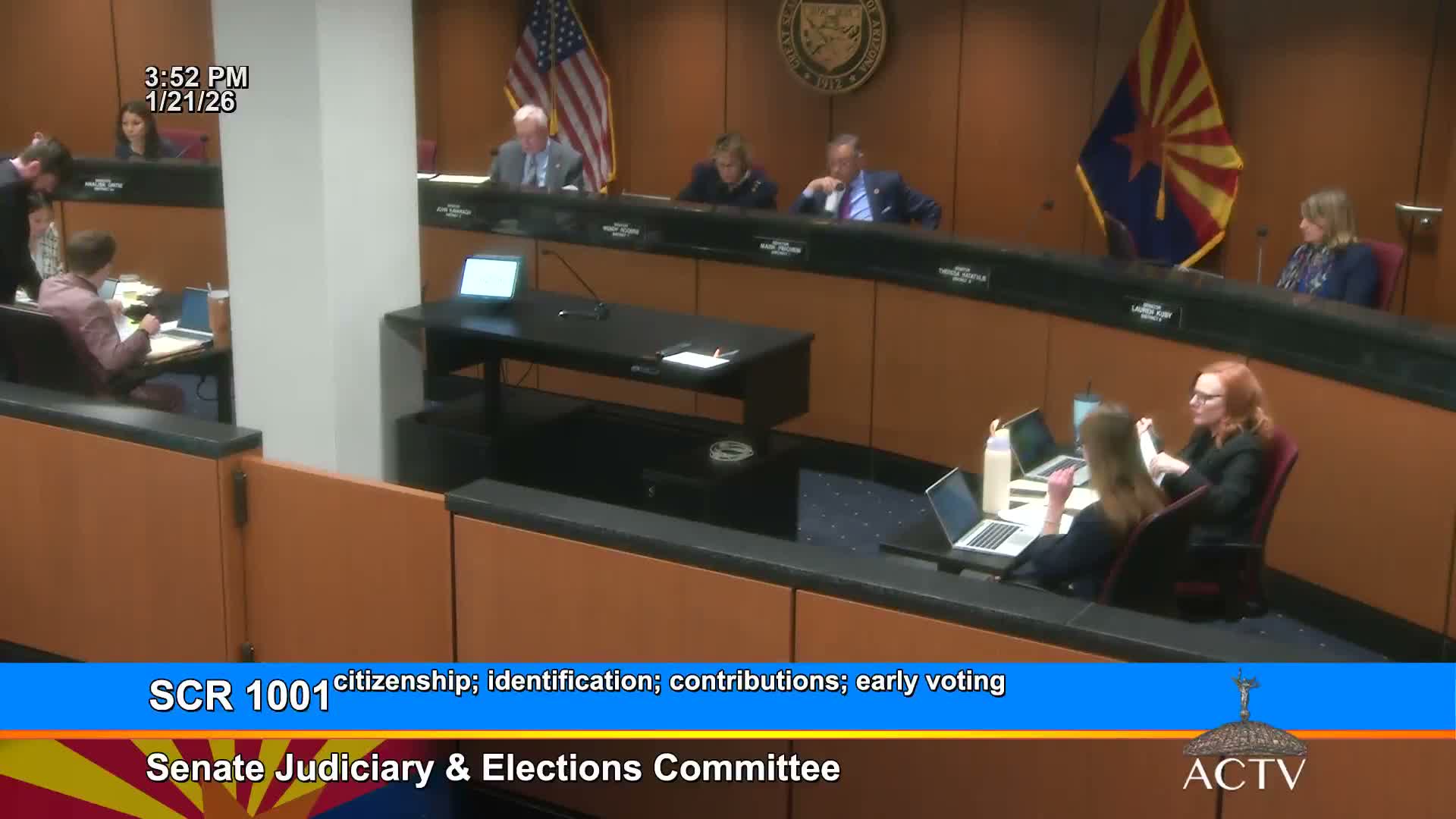
Committee advances SCR1001, a voter‑referral that would tighten early‑voting rules and ID requirements
Loading...
Summary
SCR1001, branded the Arizona Secure Elections Act by its sponsor, would end early‑mail and dropoff acceptance earlier, require government identification for in‑person ballots and restrict mail‑ballot access; the committee advanced the measure amid heated testimony from tribal leaders and rural voters who warned of disenfranchisement.
Sponsor presented SCR1001 as a voter referral aimed at speeding results and strengthening election integrity by ending acceptance of early ballots earlier in the week before election day, limiting mail‑ballot access, and requiring government identification at the polls. Supporters told the committee voters want faster, more certain election results.
The public record showed extensive, divided testimony. Proponents such as Paul Parisi urged safeguards including voter ID and ending late drop‑off. ADOT (Amy Love) testified neutrally, warning that providing free government IDs as written would have a material fiscal impact on highway funds and authorized third‑party entities; the sponsor said floor amendments were being drafted. Multiple Native American witnesses, including Gail Honeycutt (a registered voter from a tribal community) and Tamara Begay (Navajo Nation staff), testified that the proposal would create specific barriers to tribal and rural voters: mail delays, lack of birth certificates, PO boxes and long travel distances to polling places would make the measure disenfranchising without additional accommodations.
Committee members debated tradeoffs between speed of results and voter access. Some members pledged to consider amendments to preserve line‑in‑person protections; others said the measure should go to voters so the public can decide. The committee gave SCR1001 a due‑pass recommendation by a 4‑3 vote after completing extended testimony and discussion and while indicating additional floor amendments were likely.