
Appropriations panel backs $1 million contingency for Colorado River litigation
Get AI-powered insights, summaries, and transcripts
Sign Up Free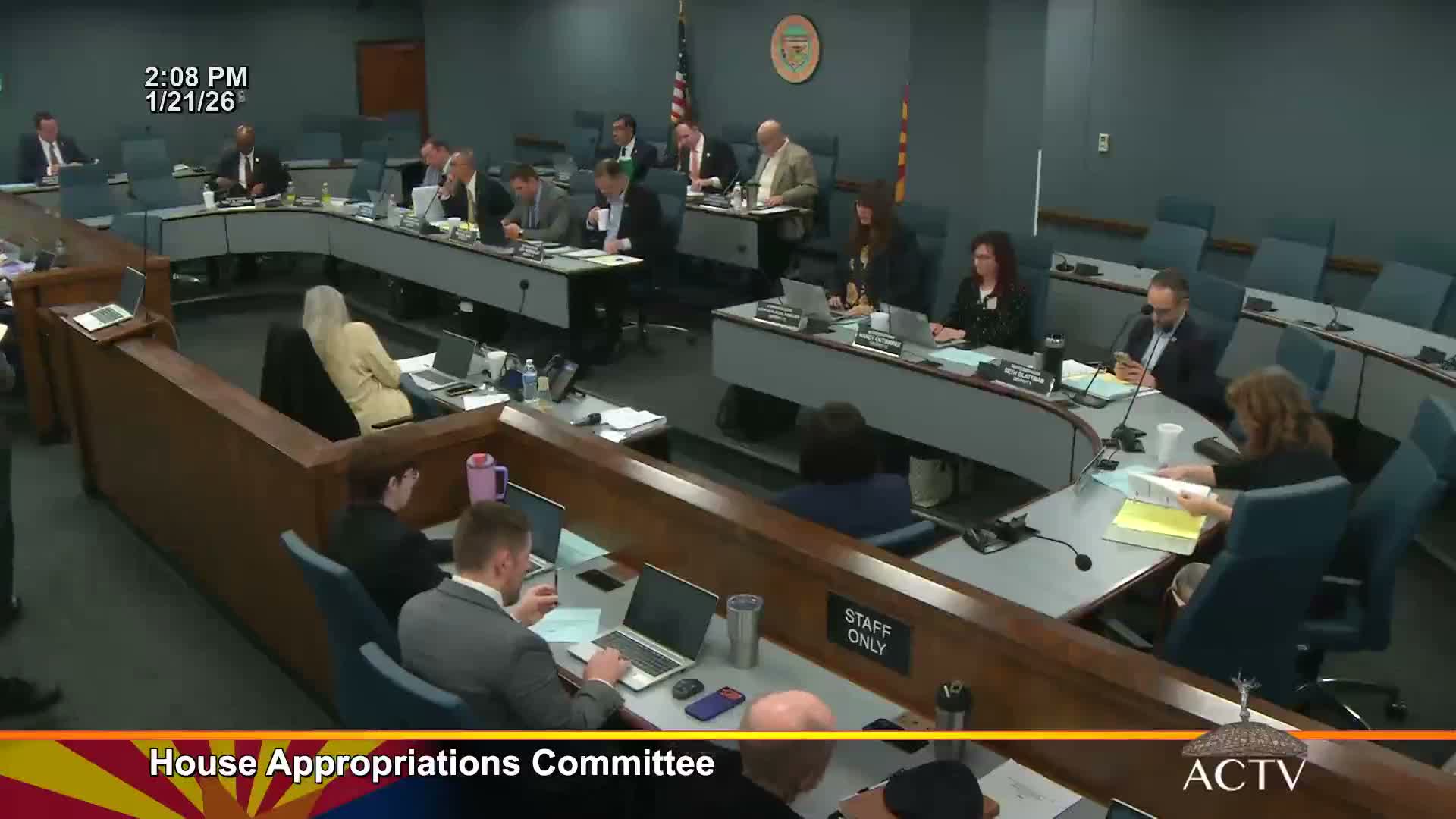
Summary
The Arizona House Appropriations Committee voted 17–1 to give House Bill 2116 a due‑pass recommendation; the bill would appropriate $1 million from the state general fund in FY2027 to the Colorado River Litigation Fund as a contingency if multistate negotiations fail.
The Arizona House Committee on Appropriations on Wednesday recommended House Bill 2116, a $1 million appropriation to the Colorado River Litigation Fund, by a 17–1 roll‑call vote. The bill’s sponsor said the funding is intended as contingency money in case multistate negotiations over post‑2026 Colorado River management require litigation.
Corbin Wright, a JLBC research analyst, told the committee HB2116 would appropriate $1,000,000 from the state general fund in fiscal year 2027 to the Colorado River Litigation Fund. Sponsor Representative Gail Griffin described the measure as “a repeat of last year’s appropriation,” saying the intent is to prepare Arizona to defend its share of river rights should a seven‑state plan not be reached.
Trent Blomberg, chief legislative liaison for the Arizona Department of Water Resources, said the department supports the bill as an insurance policy. Blomberg summarized the legal background — the 1922 compact and subsequent agreements — and noted that ADWR’s director is Arizona’s designated representative in Colorado River negotiations under Title 45 §107. He said the department prefers a negotiated seven‑state solution but supports readiness to defend state entitlements.
During questioning members clarified that the governor’s proposed Colorado River Protection Fund and the litigation fund serve different purposes: the protection fund would focus on conservation, mitigation and adaptation, while the litigation fund—created last year—would be used for federal litigation if talks fail. Blomberg confirmed the executive branch had been consulted before the department signed in support of the bill.
The committee gave HB2116 a due‑pass recommendation. The bill now moves through the legislative process for further floor consideration and possible amendment.