Get Full Government Meeting Transcripts, Videos, & Alerts Forever!
Get email alerts on the Economic Development topic
No spam. Unsubscribe anytime.
Planning Commission reviews Business & Community Impact Guide to steer redevelopment and limit liquor density
Summary
Commissioners discussed a new Business & Community Impact Guide and Business Ecosystem Field Guide aimed at attracting grocery stores, restaurants and health services, repurposing vacant auto-related buildings, and strengthening enforcement against blighted properties.
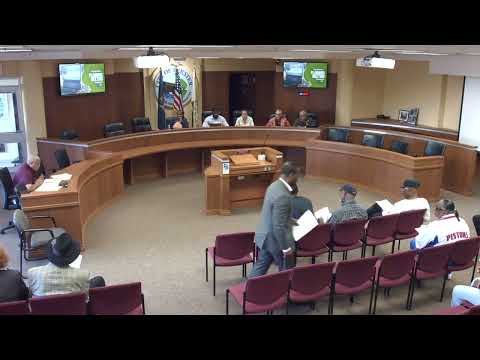
At the May 27 meeting, a planning commissioner introduced a Business & Community Impact Guide and a Business Ecosystem Field Guide intended to give commissioners and council a compact, data-driven tool to evaluate business proposals.
The presenter said Inkster’s demographic snapshot (approximately 25,000 residents; 74.4% Black/African American; median household income about $39,000; 36.3% of residents below the poverty line, using 2019–2023 data) highlights market gaps the guides aim to address. The presentation noted existing moratoriums on auto repair shops and car dealerships and recommended focusing recruitment on grocery or co-op food stores, sit-down restaurants, urgent care/health services, tech and service businesses, and mixed-use housing.
Commissioners and residents emphasized opposition to adding liquor stores and marijuana retailers; the presenter explained that with the city’s area (~6 square miles) and more than 10 liquor stores, Inkster meets CDC thresholds for high-density liquor retailing (roughly 1.67 stores per square mile). The guide includes nearby case studies showing how auto-related commercial buildings were converted to offices, tech spaces or gardens in the Detroit area.
Residents raised enforcement concerns about vacant or stalled projects (Big B Coffee, Dairy Queen site, and other storefronts) and urged stronger follow-up. Staff said the building department has issued tags/stickers on problem properties and that code enforcement and, if necessary, legal processes would be used to secure compliance. The presenter suggested outreach strategies for business attraction, partnerships with state economic-development resources, and a possible local "business champion" recognition program.
Commissioners asked staff to post the guides online and circulate summaries to council and the public. Staff agreed to follow up with code enforcement on outstanding sites and to prepare accessible copies of the guides for council consideration.