Get Full Government Meeting Transcripts, Videos, & Alerts Forever!
Get email alerts on the Special Land Use 2617 Middlebelt topic
No spam. Unsubscribe anytime.
Commission backs 2617 Middlebelt gas‑station site plan, forwards liquor‑sales request to council with conditions and legal review
Summary
The Planning Commission approved the preliminary site plan and recommended approval of the automobile service special land use for a proposed gas station at 2617 Middlebelt. The commission also recommended alcohol sales to City Council with conditions and directed staff to ask the city attorney whether the commission may lawfully limit floor space devoted to liquor.
The Planning Commission voted to advance a redevelopment proposal for 2617 Middlebelt Road while referring the applicant’s request to sell beer, wine and liquor to City Council with conditions and legal review.
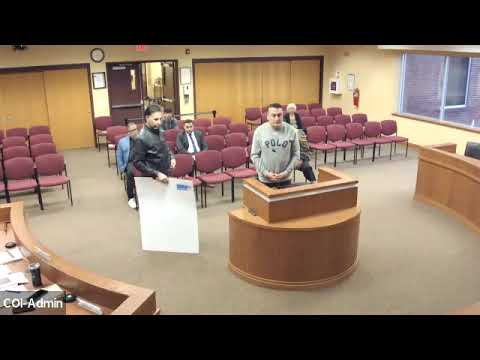
Applicant representative Zaid (identified as representing the owners through 'z 89 build') described plans to renovate the existing building at the former Brothers Towing site, install four pumps, provide about 10 parking spaces, and operate a small, well‑lit convenience store and mini‑mart offering deli items, frozen goods and, if permitted, liquor, beer and wine. He said the building would be ‘‘lifted up’’ and refaced to improve the corner.
Planning staff told commissioners the application was submitted before a city moratorium on new gas stations and alcohol sales and is therefore not subject to the moratorium. Staff recommended approval of the site plan subject to final submittals (photometric plan, canopy details, security plan) and recommended the automobile service special land use to City Council.
Commissioners approved the preliminary site plan and recommended approval of the automobile service/gas station special land use by voice vote. On the separate question of on‑site alcohol sales, commissioners debated potential community impacts and whether the commission or City Council could legally impose a limit on the share of floor space devoted to alcohol. One commissioner cited a Michigan Liquor Control Commission requirement reported during discussion that gas‑station applicants must maintain a minimum inventory at cost (excluding alcoholic beverages and fuel) ‘‘250,000’’ which, commissioners noted, would constrain how much of a small (roughly 2,700–2,799 sq ft) store could be dedicated to non‑alcohol inventory and still meet the MLCC requirement.
Following discussion, the Planning Commission voted to recommend approval of liquor, beer and wine sales to City Council with the explicit condition that city legal counsel review whether the commission's suggested limitations (for example, a percentage cap on liquor floor space) can be imposed and, if so, advise specific language for Council consideration.
What happens next: the site plan approval and the commission’s recommendations on the two special land uses will be forwarded to City Council. City legal staff were asked to determine whether an enforceable percentage‑or‑floor‑space cap on alcohol sales may be included in a recommendation, and if so, what language would be required.