Get Full Government Meeting Transcripts, Videos, & Alerts Forever!
Get email alerts on the Waste Management topic
No spam. Unsubscribe anytime.
Local junk-removal owner pitches Tenino takeover of city garbage collection
Summary
Matisse, owner of Get It Away Junk Removal, told the Tenino City Council he is exploring a locally run garbage-collection contract for Tenino (and neighboring Rainier and Yelm), outlining a staged plan to win municipal contracts, secure financing and buy trucks while noting regulatory limits and startup costs.
Matisse, owner of Get It Away Junk Removal, presented a staged plan on Jan. 14 to explore providing municipal garbage collection for Tenino and nearby cities as an alternative to the long-standing incumbent, LeMay. He told the council he is seeking initial interest from cities, developing a business model, lining up financing and equipment, and would only buy expensive collection trucks after a contract is assured.
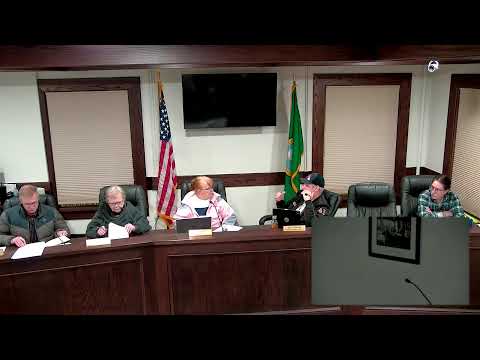
The proposal, delivered during the presentations portion of Tuesday’s meeting, emphasized local control and community benefits. “I care more about the garbage in Tenino than LeMay probably ever has,” Matisse said, arguing a local company could better tailor recycling campaigns, community cleanups and reuse efforts. He said contracting through a city would give municipal officials more oversight of rates and service terms than the current system overseen by the state regulator.
Why it matters: Tenino’s current contractor holds a long-running service area contract under statewide regulation. Matisse said Rainier’s and Yelm’s garbage contracts expire in 2028 and 2027, respectively, creating a potential window for negotiations with multiple cities. He cited equipment costs as a major barrier—estimating collection trucks at about $300,000–$450,000 each—and said his company would seek contract guarantees before purchasing vehicles or securing investor financing.
Matisse outlined practical and regulatory steps: an initial presentation to gauge city interest, a second presentation with a formal plan and named team members, then negotiations to become a contract provider if municipalities agree. He explained the relevant regulator—the Washington Utilities and Transportation Commission (WUTC)—typically governs wide-area service franchises, but a city contract would shift rate-setting and oversight to the municipality.
Council reaction was cautious but receptive. A councilmember and the mayor said they were impressed by the presenter’s initiative and noted the concept aligns with city goals to support local businesses, while acknowledging many steps remain before any change in service. Council members asked for follow-up on timelines, contract expirations, and how reliability and long-term viability would be guaranteed.
Details and uncertainties: Matisse repeated a national landfill-timeline estimate (saying landfills could be exhausted by about 2030) and advocated greater recycling and local diversion programs; those broader claims were presented as the speaker’s industry view and were not substantiated by council staff during the meeting. Matisse also noted that state-level solid-waste carrier permits are relatively inexpensive but said the main practical barrier to starting collection is securing multi-city contracts that would justify capital investment.
Next steps: Councilmembers asked staff to keep the item on the agenda for follow-up presentations and to return with additional contract timelines and any required regulatory steps. The council did not take action at the Jan. 14 meeting.