Get Full Government Meeting Transcripts, Videos, & Alerts Forever!
Get email alerts on the Comprehensive Plan topic
No spam. Unsubscribe anytime.
Tenino Planning Commission flags appointment-record gaps, reviews comp plan draft and annexation requests
Summary
Commissioners debated inconsistent appointment records that could affect the legal validity of future votes, reviewed a consolidated draft of the comprehensive plan (using the 2023 Housing Action Plan data), and directed staff to prepare memos on potential annexations including Miles Sand and Gravel.
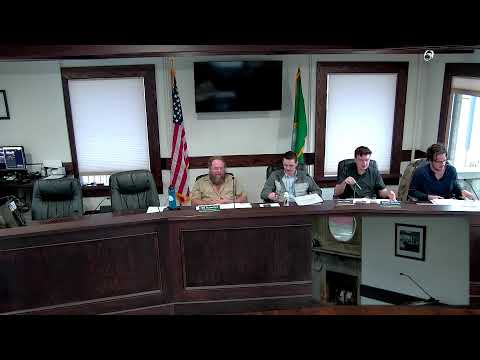
Tenino — At a meeting on April 9, 2025, the Tenino Planning Commission paused substantive decisions after commissioners discovered inconsistent records about when several commissioners’ appointments expire, and proceeded to review an initial consolidated draft of the city’s comprehensive plan and several possible annexation requests.
The commission’s earliest discussion centered on conflicting appointment dates. Commissioners compared varying expiration years — ’28, ’29 and even ’30 — for different seats and raised concerns about whether any members were serving beyond their authority. "It's a liability to the city," said Jessica Davis, who explained that an unrecorded or expired appointment could be grounds to challenge a later vote. Commissioners agreed to delay actions that could be legally sensitive until staff locates the original appointment documents.
After agreeing to verify records, the commission took routine procedural steps: it approved the minutes of the Feb. 12 meeting and adopted an amended agenda that struck item number 5. There were no public comments.
Staff presented a consolidated "ugly" draft of the comprehensive plan that merges prior comments into policy language and leaves figures and numbering as placeholders until a more finalized document is ready. Commissioners generally supported using data from the city’s 2023 Housing Action Plan but questioned whether staff time should be spent updating the numbers before the next draft. Jessica Davis said the housing plan work had been funded by a Department of Commerce grant that supported data research and the housing action analysis.
On process, staff outlined the path to final adoption: the planning commission will hold a public hearing, then send the plan to the Department of Commerce for a 60-day review that solicits comments from state agencies and tribal governments, update the document as appropriate, and then forward it to the city council for two readings before final adoption.
The meeting also addressed annexation topics raised in a letter from the mayor: a parcel owned by Miles Sand and Gravel, approximately 60 additional acres of parkland owned by the city, and a smaller "Little Triangle" parcel currently described as owned by stone carvers. Commissioners directed staff to assemble a planning memo with details on those properties and noted that some parcels may lie outside the urban growth area and therefore require longer processes.
Other items discussed included a public survey and outreach timeline (staff recommended a roughly 30-day survey window aiming for results by the June meeting), mapping and zoning of city-owned properties, and the climate resilience element and climate action committee. The commission acknowledged that some elements would return for more focused committee review.
The commission confirmed that William Bennett’s signed oath of office was on file and welcomed him. The meeting ended after brief introductions; Maria Rodriguez identified herself as the city police clerk during introductions.
Next steps: staff will search for original appointment documents, prepare a planning memo on the annexation requests, post and run the public survey for roughly 30 days, and return a revised or hybrid draft of the comprehensive plan to the commission for review at the next meeting. No final adoption votes occurred at this meeting.