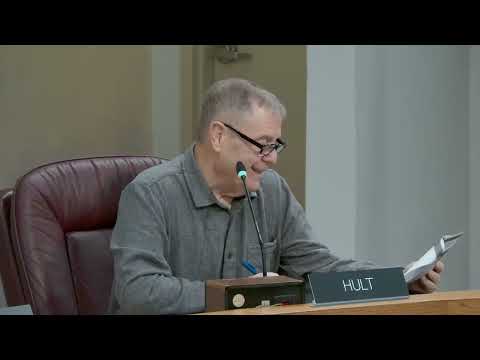
Civil Service Commission hears 2026 plan to standardize classification and testing cycles
Summary
The commission received a 2026 work plan calling for a six-year cycle for classification and test development, targeted assessments for fire positions, and new internal standards to reduce inconsistent job requirements across analysts. Commissioners pressed presenters on turnover and recent layoffs.
At its Jan. 20, 2026, meeting the Civil Service Commission received a detailed work plan aimed at standardizing classification and testing across city departments.
Senior merit system analyst Brian Sullivan presented a proposal to place major classification studies and test development on a six-year cycle. "We are trying to get our standard scheduled work onto a six-year cycle," Sullivan said, adding that major classification studies would occur at the start of each cycle and that uniform-position promotional tests would be rebuilt each cycle for security reasons.
The plan calls for biennial reviews between cycles, the use of "flip" processes or minor revisions where appropriate, and closer alignment among analysts so that classifications and physical requirements are applied consistently. Sullivan said the office revised roughly 100 classifications in 2025 and aims to reach similar throughput while avoiding repeated work on the same job series.
Sullivan outlined 2026 assessment timing: a battalion chief assessment is scheduled for May, a fire lieutenant assessment in the fall and fire captain development work continuing into early 2027. He also identified potential major classification projects in wastewater treatment and fleet, and said staff will complete a test-development closeout process and publish an internal pamphlet on classification standards in the first quarter to improve consistency.
Commissioners used the presentation to question turnover and staffing pressures. Sullivan said turnover historically hovers above a 5% target — "probably 7 to 8%" in the foreseeable future — and rose to about 11–12% during the COVID period. He cited competition from other public employers and expanded remote-work opportunities that permit workers to take jobs outside Spokane as contributing factors.
Separately, the commission heard from the chief examiner that layoffs identified last fall were implemented on Dec. 21, and the office reported nine separations. Staff said some employees were placed in other roles where possible and that rehiring would depend on the city budget this year.
The commission praised the push for consistent standards across analysts, noting examples of inconsistent lift requirements across closely related jobs that the new standards aim to correct. Sullivan said the reforms are designed so any analyst could pick up work without the product appearing to be tied to an individual analyst's style.
The commission took no formal policy action on the work plan at the meeting; Sullivan's presentation concluded with an invitation for questions and feedback and with planned deliverables for early 2026.
AI generated
The text on this page is AI generated. Summaries, highlights, analysis, and video transcripts are all produced from the original source material.
AI can make mistakes, so if you spot one, and we will fix it for everyone.
Note: the source content is unaltered by us. Any content source we link to, be it a video, an audio recording, or a document, is presented exactly as its publisher released it. That publisher is usually a government body, sometimes an individual official or another organisation.