
Spokane Valley council hears police warning on cryptocurrency kiosks, asks staff to draft ordinance options
Get AI-powered insights, summaries, and transcripts
Sign Up Free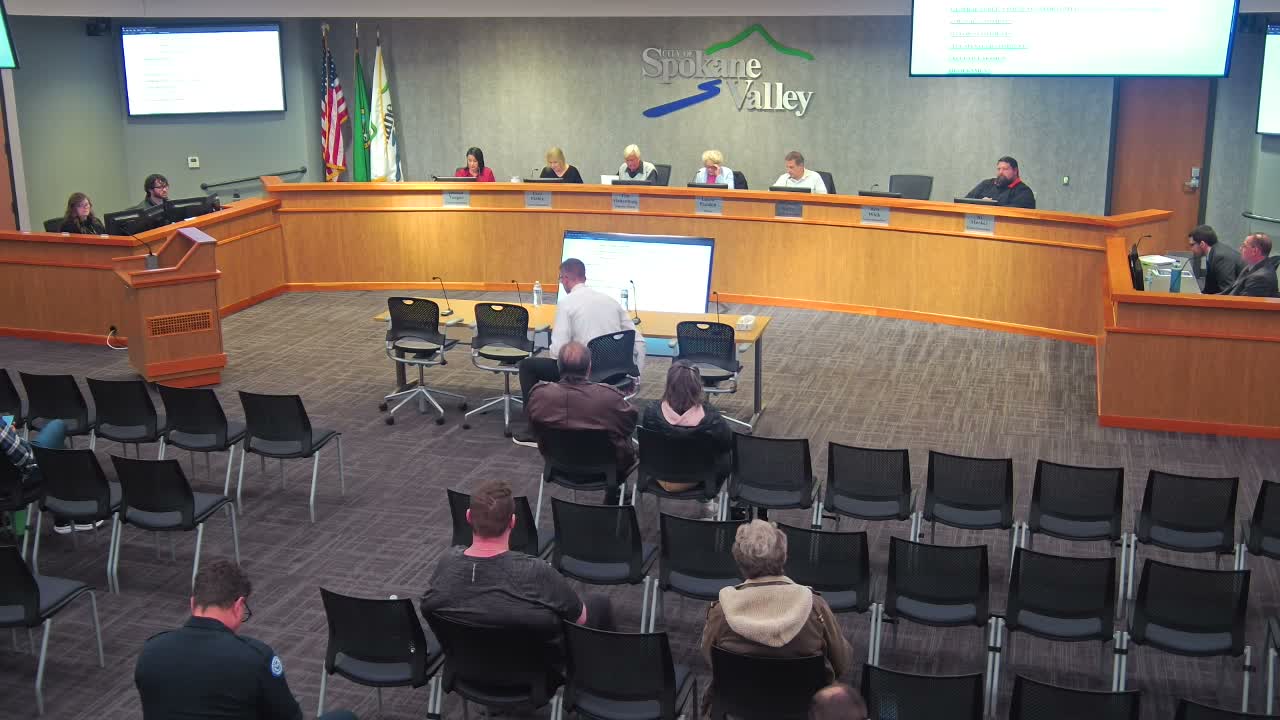
Summary
Police briefed the council on rising “cash-to-crypto” scams that target elders and other residents; detectives described tactics, local recoveries and high kiosk fees. Council asked the city attorney to return with code-language options, including civil-infraction and business-license revocation approaches.
Law enforcement officials on Tuesday urged Spokane Valley leaders to consider new local rules for standalone cryptocurrency ATMs and kiosks after describing a surge in scams that use those machines to launder stolen cash.
Chief Dave Ellis and Sgt. Pat Bloomer told the City Council that scammers routinely pressure victims to withdraw cash and deposit it into crypto kiosks, often after impersonating law‑enforcement officers, prosecutors or court officials on the phone. "If someone on the phone directed you to this ATM machine, it's a scam," Bloomer said during his presentation, reading a warning that the department photographs on local machines.
The presentation summarized national and local trends cited by detectives: rapid peer‑to‑peer transfers that complicate recovery, high kiosk fees (the presenters said typical spreads run 22–27 percent), and a string of local incidents in 2024–25 in which residents lost thousands of dollars. The Spokane Valley Investigative Unit reported freezing and recovering some crypto assets and said detectives recovered roughly $194,758 in cryptocurrency and froze another ~$130,500 in January while investigating larger, ongoing cases.
City Attorney Kelly Concrete outlined enforcement options the council could consider: a class‑1 civil infraction paired with authority to revoke a local business license, or escalating penalties to misdemeanor or gross‑misdemeanor levels for repeat offenders. Concrete noted that Spokane has adopted a prohibition in its code that gives kiosk operators 60 days to remove machines and that staff could bring similar ordinance language to this council.
Council members asked practical questions about definitions, machine types and unintended effects on legitimate financial services. One member asked how the city would define a kiosk vs. a regular retail point of sale; Ellis and Bloomer said staff would research definitions and that many kiosks are operated by separate firms rather than by local merchants.
Council gave staff consensus direction to return with draft code options, including noncriminal penalties paired with business‑license revocation and, separately, misdemeanor pathways for more serious or repeat violations. The city attorney's office will coordinate draft language with law enforcement and prosecutors before returning to council for further direction.
Next steps: staff will draft ordinance options and bring them back for council review and potential public hearings.