City presents revamped traffic-calming program and opens 60-day web form for safety concerns
Loading...
Summary
City transportation staff outlined updates to Spokane’s traffic-calming program, said the city will solicit safety concerns via a web form going live Feb. 2 for 60 days, and described funding, consultant use and an expansion of speed/school cameras.
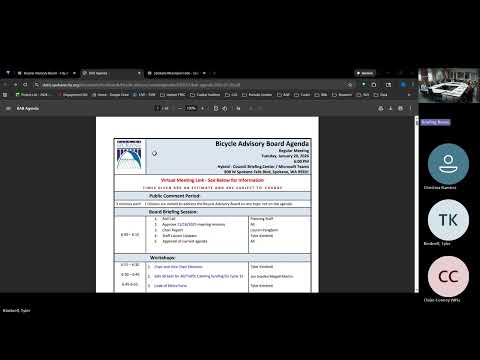
John Snyder, director of transportation sustainability for the City of Spokane, told the Bicycle Advisory Board that the city is retooling its traffic-calming program to target projects that reduce serious crashes and to better implement the city’s bicycle and pedestrian master plans. "If we are trying to affect safety, we need to do it coming and going, not just finding people for violating," Snyder said, describing a shift from piecemeal spot fixes to network projects that build out plan-level corridors.
Snyder said the city will reopen public solicitation for traffic-calming proposals via an online form that will go live on Feb. 2 and remain open for roughly 60 days. "We want a 60 day window where anybody can submit via this web form a traffic safety concern that they think warrants a traffic calming project," he said, adding that the form will guide respondents to describe the safety problem rather than prescribe a solution.
Snyder reviewed how staff will combine new submissions with remaining projects from a 2021–22 consultant-generated "Dow" list and prioritize a slate of network and spot projects to be further scoped. He said the city typically budgets about $3 million per year for traffic-calming work and that last year the program was briefly boosted to about $5 million. "We're only bringing in about a little over $3,000,000 a year," he said. Snyder added that the city may expand the program if enforcement-camera revenues increase.
The presentation also covered an expansion of automated enforcement. Snyder said 24 cameras are active and several more are being added; staff identified an additional list of about 24 candidate camera locations for speed monitoring beyond photo-red intersections and school zones. "We have a list of 24 additional cameras," he said, and noted staffing constraints in municipal court and the prosecutor’s office limit how many can be activated quickly.
Snyder said the city will rely on in-house staff and consultant support (adding to an existing consultant contract to avoid a full rebid) to scope and design selected projects. He encouraged residents to submit concerns individually or as a group and said consolidated submissions from multiple neighbors or neighborhood councils carry more weight but emphasized that the form is open to everyone. "If you send us an email and you say I'm representing these three neighbors, that always carries a little bit more weight," he said.
Next steps outlined by Snyder include cataloging submissions during Feb. and March, presenting a longer raw list to the Transportation Commission in April, designing projects in summer and forwarding final recommendations to council for a December vote to allow winter bidding. Snyder closed by offering staff contact information for follow-up and thanking board members for feedback.
The board asked several clarifying questions about the form, response times and camera data; Snyder said the form will include dropdowns and a map input similar to the city’s 3-1-1 system and pledged improved response tracking for submitted concerns.